Why Replace
When a New OpenerMakes More Sense
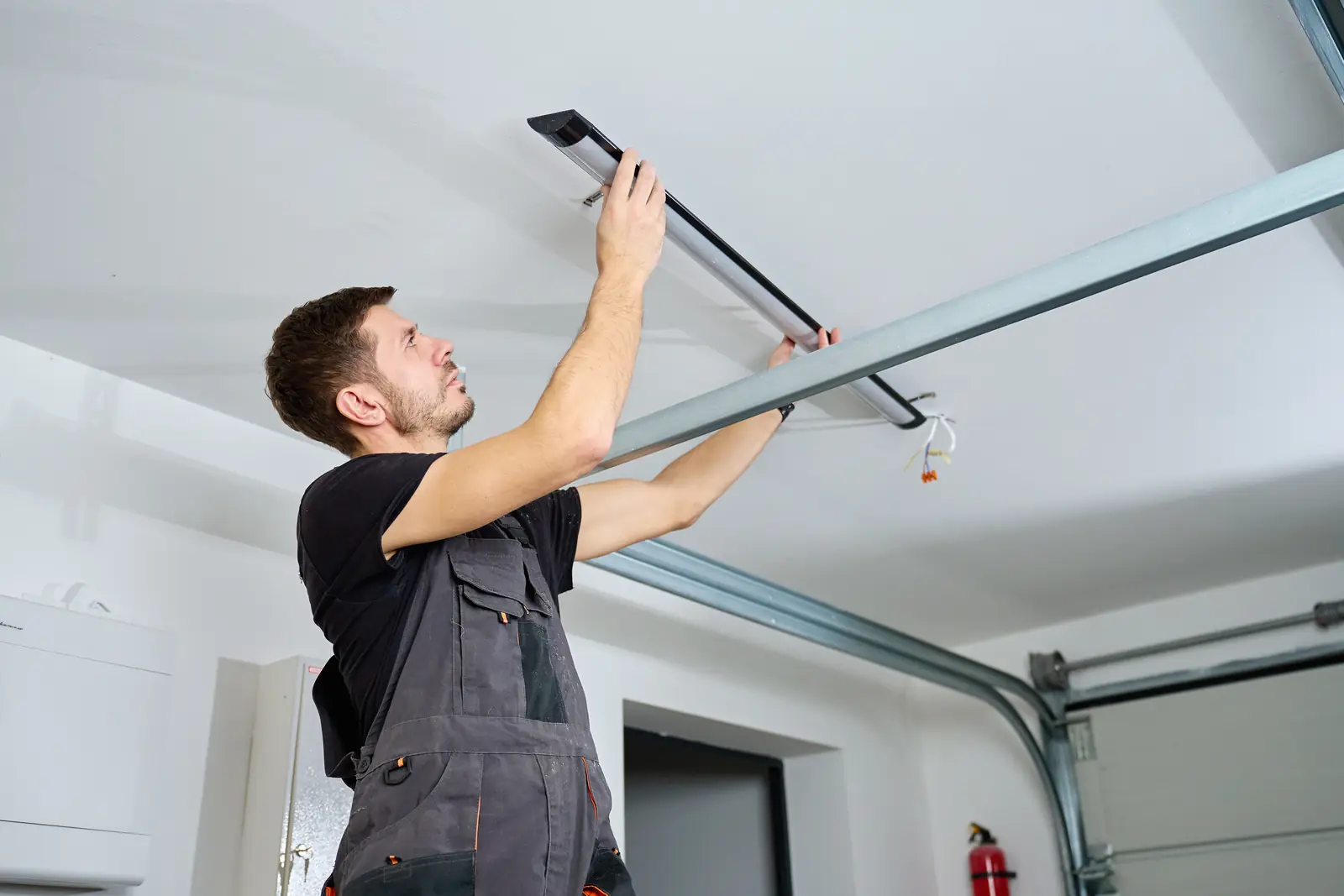
Plenty of homes in Menomonee Falls still run openers installed in the 1980s and 1990s. Many of those units work, but they were built before modern safety and security features became standard, and replacement parts for them are getting hard to find.
If your opener predates photo-eye sensors, it does not meet the safety-reversal requirements that have applied to residential openers sold in the United States since 1993. If it uses a fixed code set with little DIP switches inside the remote, anyone with a cheap code grabber can potentially copy it. Either one is a good reason to upgrade on its own.
We also see homeowners replace a working opener simply because it is loud. An old chain unit bolted to the ceiling joists of a garage under a bedroom can wake the whole house at 5 a.m. A modern belt drive or wall-mount unit fixes that in an afternoon.
If your current opener has only recently started acting up, it may be worth a look before you replace it. Our garage door opener repair page covers the faults we can usually fix for far less than the cost of a new unit.
When To Call
Signs You NeedOpener Installation
- Your opener has no photo-eye sensors
- Remotes use old DIP-switch codes
- The motor is loud enough to wake the house
- Replacement parts are no longer available
- No way to open the door in a power outage
- You want phone alerts and remote closing
- The opener strains or stalls on cold mornings
- You are installing a new or heavier door
Drive Types
Belt, Chain, Screwor Jackshaft?
The drive is the mechanism that moves the trolley along the rail and pulls the door open. Each type has its own strengths, and the right one depends on where the garage sits in your house, how heavy the door is, and how much noise you can live with.
| Drive Type | Noise | Strengths | Best Fit |
|---|---|---|---|
| Belt drive | Very quiet | Smooth start and stop, few moving metal parts, low vibration | Attached garages, bonus rooms or bedrooms above the garage |
| Chain drive | Moderate to loud | Rugged, tolerant of heavy doors, simple to service | Detached garages, workshops, heavy wood or oversized doors |
| Screw drive | Moderate | Few parts, strong lift, threaded steel rod | Areas with steady temperatures; less common today |
| Wall-mount jackshaft | Very quiet | Mounts beside the door on the torsion bar, frees the ceiling | High or cathedral ceilings, storage lifts, low headroom |
Screw drives deserve a Wisconsin-specific note. The threaded rod relies on grease, and in a detached garage that drops below zero, that grease stiffens and the opener can strain or stall. They work fine in a heated garage, but for most local homes we steer people toward belt or chain.
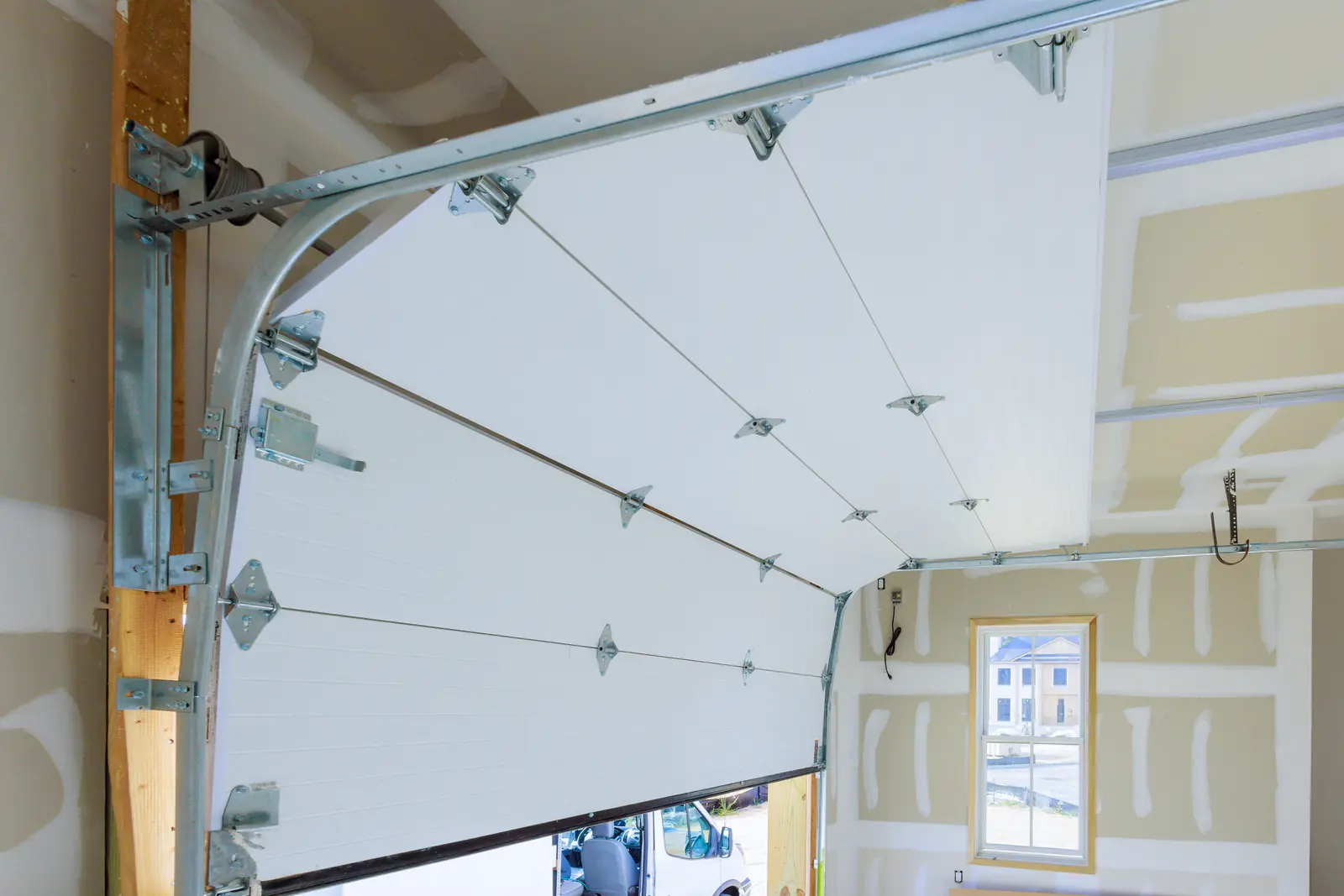
Jackshaft openers only work with torsion spring systems, because they drive the door by turning the torsion shaft directly. If your door still uses extension springs along the horizontal tracks, a wall-mount unit is not an option without converting the spring system first.
Sizing
Horsepower andMatching the Door
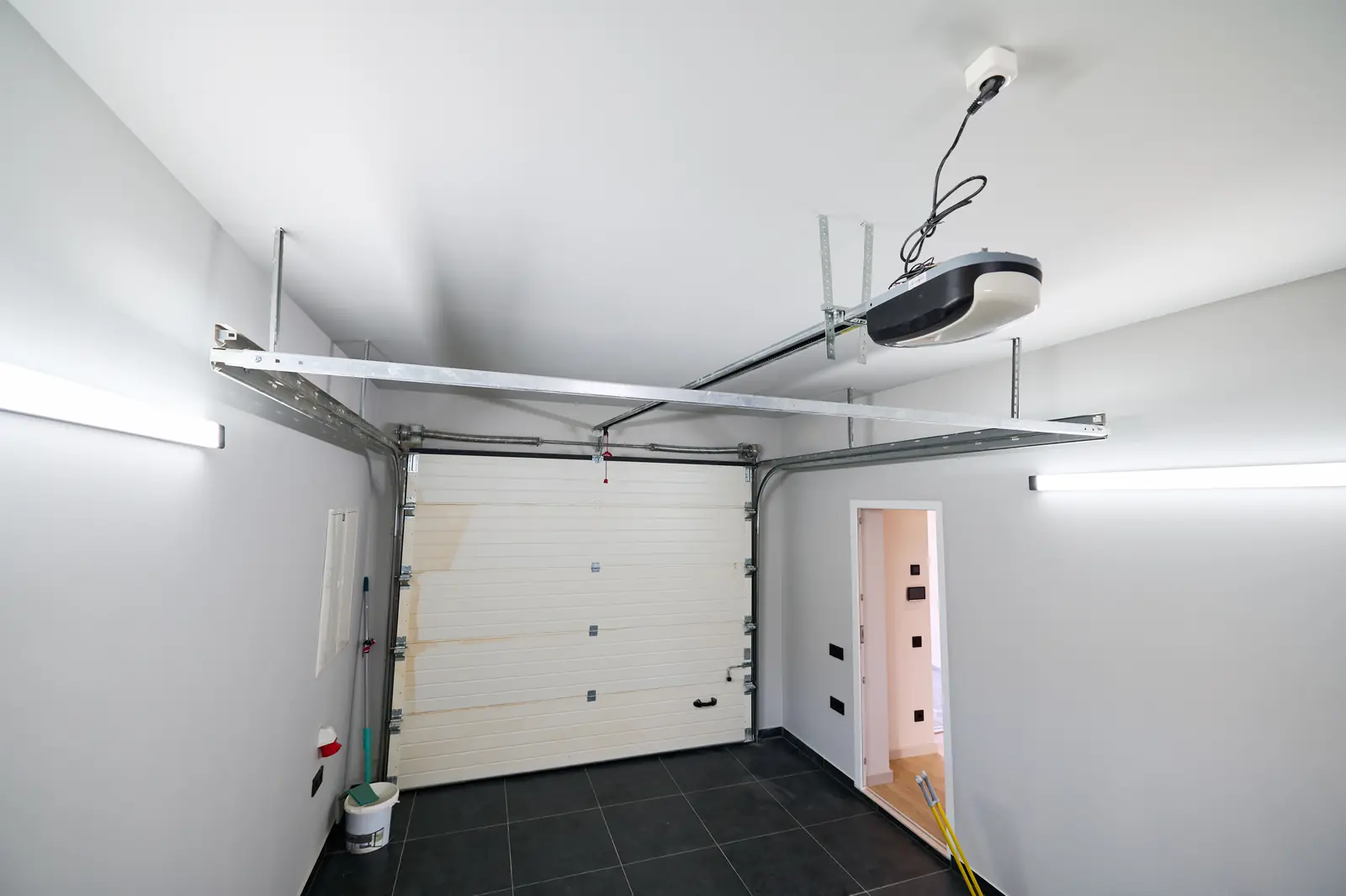
Opener motors are commonly sold as 1/2 HP, 3/4 HP and 1-1/4 HP, or with an equivalent rating on DC models. More horsepower is not always better. The opener should never be doing the heavy lifting in the first place; the springs carry the weight of the door, and the motor only guides it.
As a general guide, a 1/2 HP unit handles a standard single-car 8x7 or 9x7 steel door. A two-car 16x7 insulated steel door is a good match for 3/4 HP or an equivalent DC motor. Solid wood, carriage-house doors with real wood overlays, and 8-foot-tall doors often call for the stronger units.
- AC motors are simple and durable, with a fixed speed and a firmer start.
- DC motors offer soft start and soft stop, quieter operation, variable speed, and are the type that accepts a battery backup.
- Rail length must match door height. A standard rail fits a 7-foot door; 8-foot doors need an extension kit, and taller doors need a longer rail or a jackshaft.
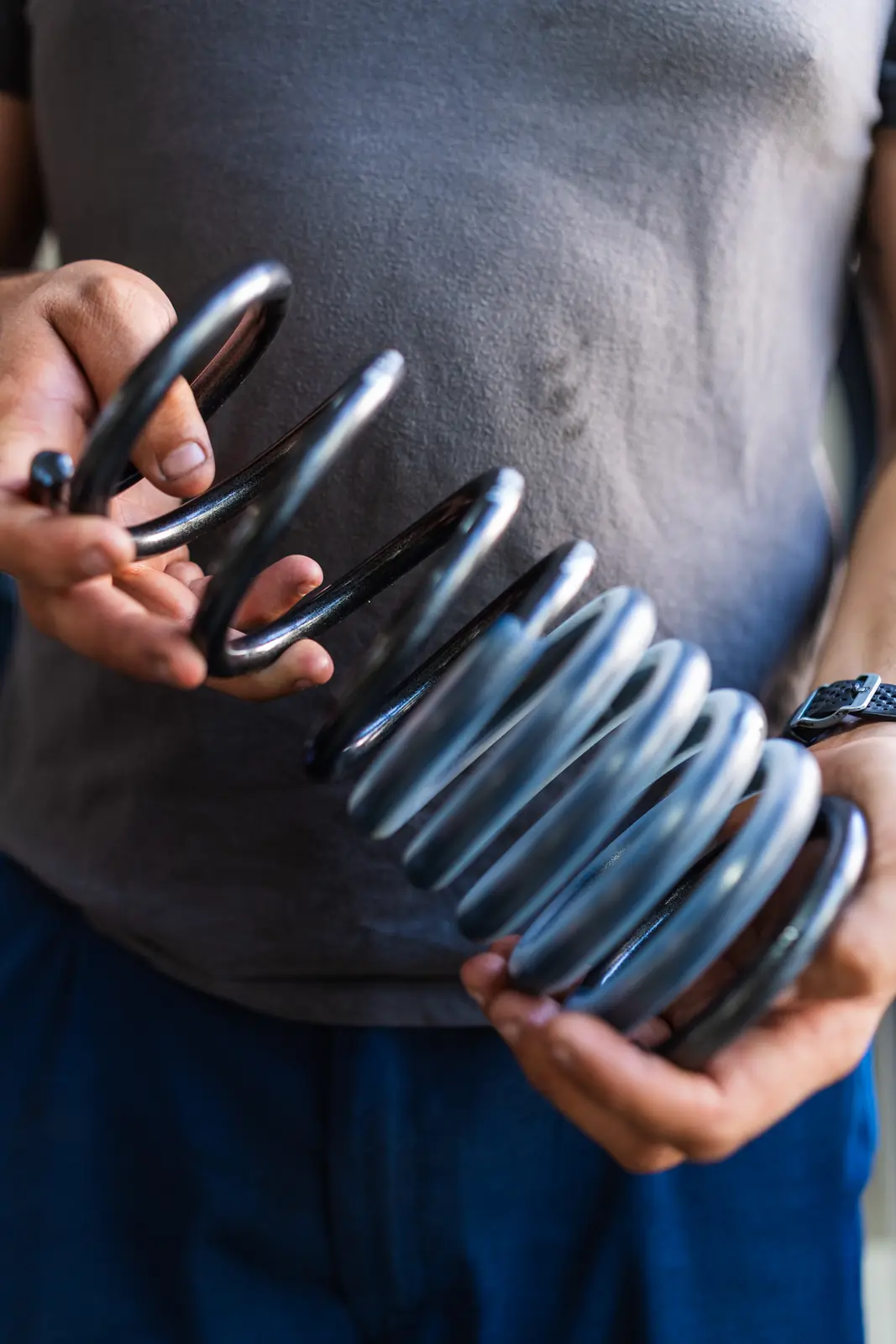
Before we size anything, we check the door balance. If a door is heavy because its springs are worn out, a bigger motor just hides the problem and wears out quickly. In that case we recommend spring replacement first so the new opener starts life on a properly balanced door.
Our Process
How We HandleYour Opener Installation
Talk Through Your Needs
Call (262) 555-0123 and tell us about your door, ceiling height and the features you care about. We will narrow the choices before we visit.
Measure and Inspect
We check headroom, door size, spring type and balance on-site. Any issues with springs, cables or rollers are flagged before the opener goes in.
Remove the Old Unit
We take down the old motor, rail, brackets and sensors and haul them away. The header and ceiling mounts are checked for solid framing.
Install and Adjust
The new opener, rail, arm, photo-eyes and wall control are mounted and wired. We set travel limits and force to match your door.
Test for Safety
We run the UL 325 reversal test with a board on the floor, check the photo-eye beam, and cycle the door several times.
Program and Show You
Remotes, keypads, car buttons and the app are paired. We show you the manual release and how to use battery backup during an outage.
Features
Battery Backup, Wi-Fiand Security Features
Modern openers come with features that were options or did not exist a decade ago. Some are worth paying for in our area, and a few are simply nice to have.
Battery backup. Summer thunderstorms and winter ice storms knock out power around Menomonee Falls and the surrounding villages several times a year. A battery backup unit lets you open and close the door a number of times during an outage, which matters a lot if the garage is the only practical way in or out. In some states battery backup is required on new installs; even where it is not, we consider it one of the most practical upgrades.
Smart and Wi-Fi control. Built-in Wi-Fi or a hub lets you check whether the door is open from your phone, close it remotely, get alerts, and allow package or guest access. Most units close from the app only after an audible and visual warning, which is part of how they stay compliant when no one is standing in front of the door.
Rolling code remotes. Every opener we install uses rolling code technology, sometimes sold under brand names. Each press sends a new code, so a recorded signal cannot simply be replayed to open your door.
Other worthwhile options:
- Keypads mounted outside the door for kids, dog walkers and runners
- Motion-sensing LED lights that come on when you walk into the garage
- Wall consoles with a lock button that disables remotes while you are away
- Automatic garage door locks on wall-mount openers
- Timer-to-close for people who regularly forget to shut the door
Safety First
Photo-Eyes, Force andthe UL 325 Standard
Residential garage door openers sold in the U.S. must meet UL 325, the safety standard for door and gate operators. In plain terms, the opener has to reverse if it meets an obstruction while closing, and it has to use a secondary entrapment protection device, which on residential doors is almost always a pair of photo-eye sensors.
We mount the photo-eyes on both sides of the door no higher than about 6 inches above the floor, aligned so the invisible beam crosses the full opening. If anything breaks that beam while the door is closing, the opener stops and reverses. We also wire them cleanly and secure them so a bump from a bike or snowblower will not knock them out of line.
Every installation finishes with a reversal test. We lay a 1-1/2 inch board, roughly a 2x4 laid flat, in the door's path and confirm the door reverses on contact. Then we check that the force settings are only as high as needed to move the door. Force turned up too high is a common shortcut that hides problems and defeats the safety system.
One more safety note: if your door's springs, cables or bottom brackets need adjusting before the opener goes on, that work is done by our technicians, not left for you. Those parts hold enormous stored tension and are not a DIY job.
On Install Day
What a Proper InstallActually Includes
A good installation is mostly the work you do not see. Hanging the motor is the easy part; making it run smoothly for years is in the details.
- Removing the old unit and hauling it away, along with old brackets, wire and sensors.
- Checking the door for balance, track alignment, worn rollers and loose hinges, since the opener can only be as smooth as the door it pulls.
- Header bracket mounting into solid framing above the door, not just drywall. If there is no proper header, we add blocking.
- Rail and motor hanging with sturdy angle iron from the ceiling joists or trusses, square to the door.
- Door arm and reinforcement attached to the top section with a reinforcement strut on lighter steel doors so the top panel does not buckle.
- Travel limits set so the door closes fully onto the floor seal and opens to the right height without slamming the stops.
- Programming of your remotes, keypad, car's built-in buttons and app, plus a walkthrough of how to use the manual release.
We also make sure the outlet is in the right place. Openers should plug into a ceiling outlet near the motor head, not run on extension cords draped across the joists.
Local Homes
Installing Openers inMenomonee Falls Garages
The housing stock here shapes a lot of our choices. Older ranches and split-levels near Old Falls Village and along Appleton Avenue often have low ceilings, short headroom over the door, or a single-car door that was later swapped for something heavier. Newer subdivisions off Pilgrim Road and County Line Road tend to have taller ceilings, insulated 16x7 doors and space for wall-mount openers.
Low headroom can make a standard trolley-and-rail setup tight. We measure the distance from the top of the door's travel to the ceiling before quoting, and if it is short we will talk you through options such as a low-headroom track kit or a jackshaft opener.
Cold matters too. In unheated garages we favor drives and lubricants that cope with sub-zero mornings, and we make sure the photo-eyes are positioned where snowmelt dripping off your car will not freeze into a ridge that blocks the beam. If you are also thinking about a new door, it is easiest to do both at once; see our garage door installation page for how we plan combined projects.
We serve homeowners in Menomonee Falls and across Germantown, Sussex, Lannon, Butler, Brookfield, Richfield and northwest Milwaukee.
Choosing Well
Questions to AskBefore You Buy
A big-box store opener can look like a bargain until you discover the rail is too short, the door needs work first, or the unit is a basic AC model with none of the features you wanted. A few questions help you avoid that.
- Is anyone sleeping or working in a room above or beside the garage? If yes, lean toward belt or jackshaft.
- How heavy and how tall is your door? Wood and 8-foot doors change the motor and rail you need.
- Do you have torsion springs or extension springs? That decides whether a jackshaft is possible.
- How often do you lose power, and is the garage your main entry?
- Do you want app control, package delivery access, or a camera?
- Is there an outlet near where the motor will hang?
We are happy to walk through these on the phone at (262) 555-0123 before we ever come out, so the quote you get is for the right opener, not just the cheapest one on the shelf.