What Drums Do
The Spools That TurnSpring Force Into Lift
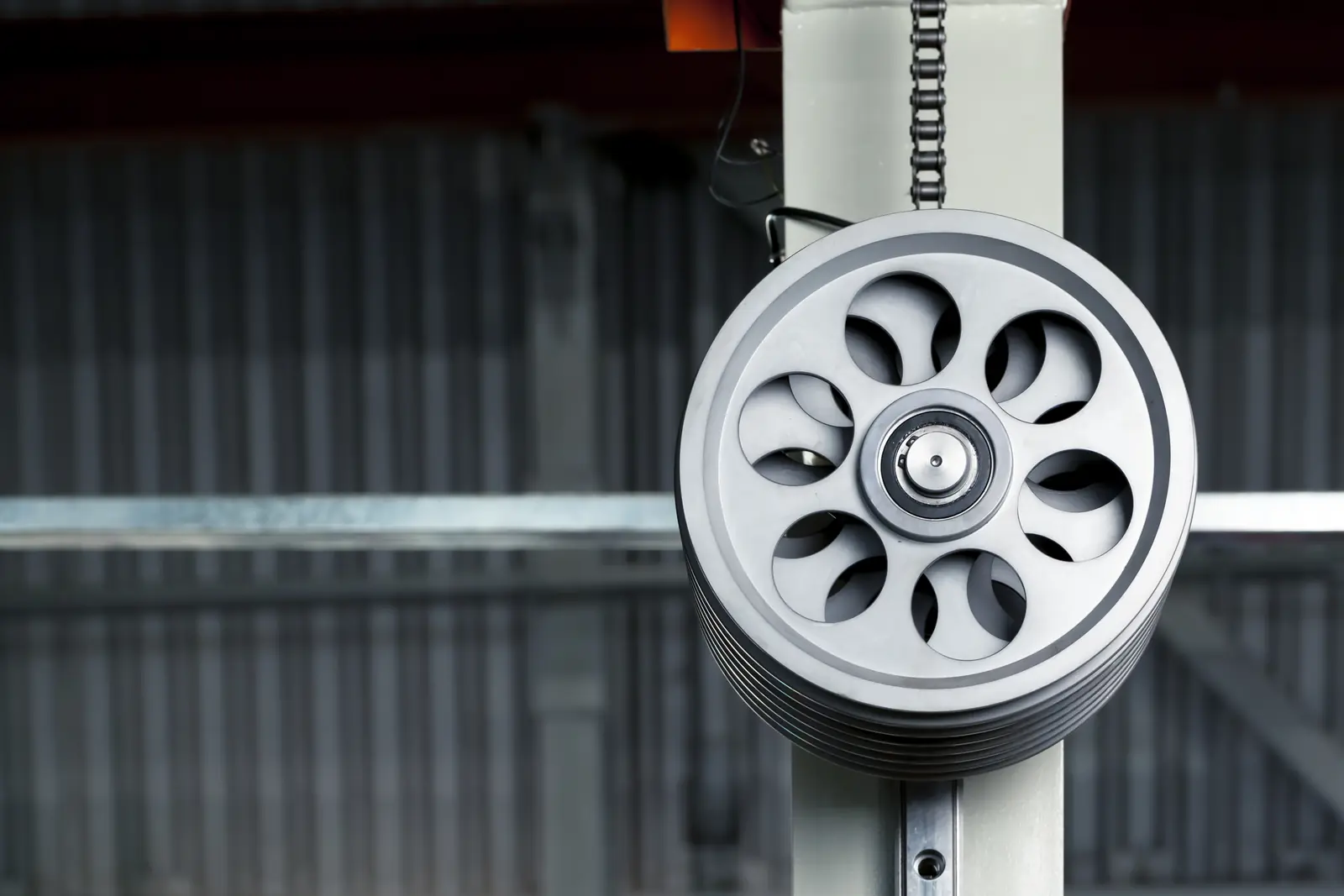
If your garage door uses torsion springs, there is a steel shaft running across the top of the door opening, just above the header. At each end of that shaft sits a cable drum, a grooved spool usually made of cast aluminum. The lift cables run from the bottom brackets of the door up to these drums and wind into the grooves.
When the springs unwind as the door opens, they turn the shaft, and the drums wind up the cables to lift the door. When the door closes, the cables unwind from the drums as the springs are wound back up. The drums have to grip the shaft tightly and keep both cables winding at exactly the same rate, or the door will rise unevenly.
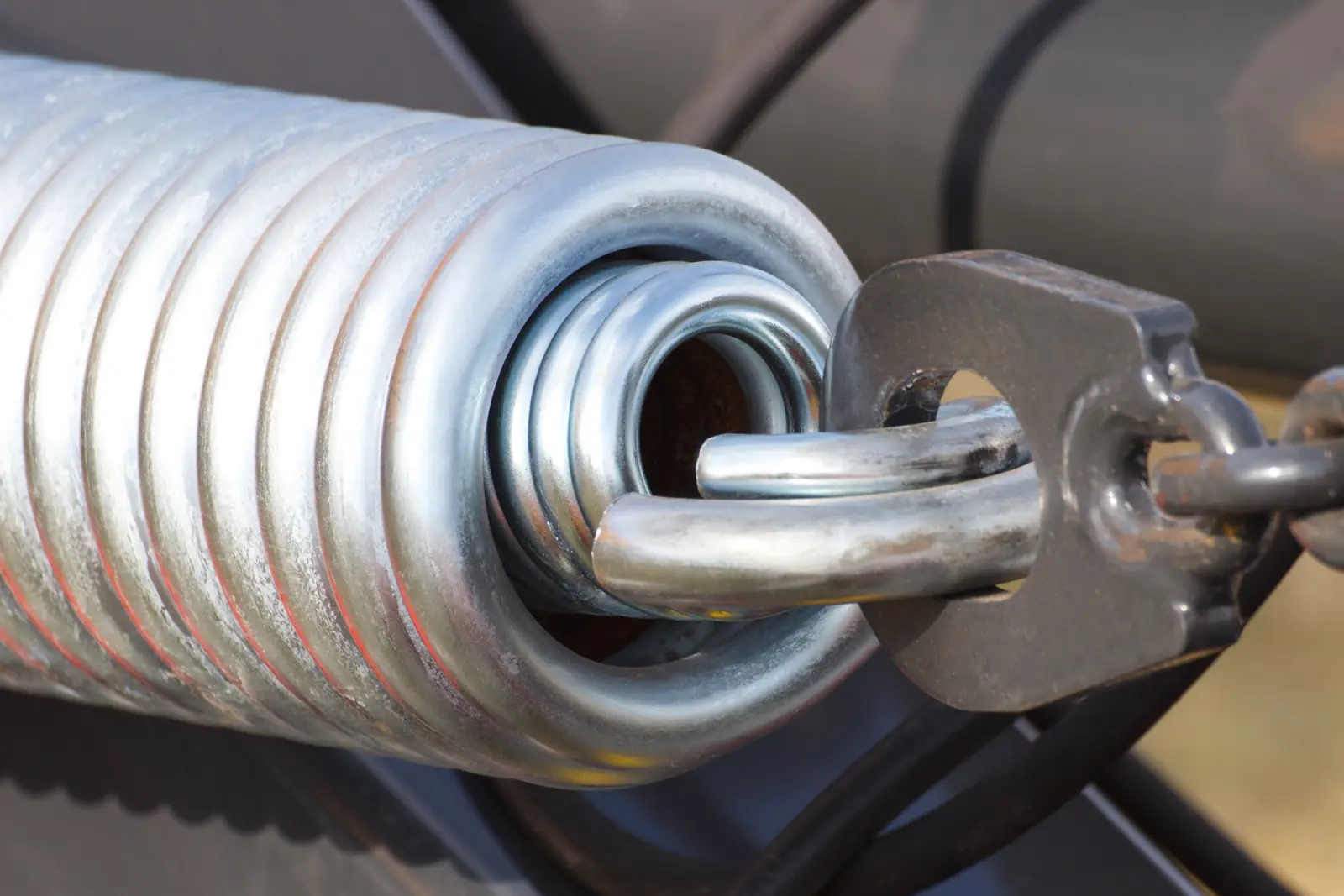
Doors with extension springs, the type stretched along the horizontal tracks, do not use cable drums. They use pulleys instead. If you are not sure which system you have, look above the door: a shaft with a spring wrapped around it means torsion and drums.
When To Call
Signs You NeedDrum Replacement
- Door hangs crooked or lifts unevenly
- Cable has come off a drum
- Visible cracks in a drum
- Cable wraps overlapping in the grooves
- Clicking or slipping sound at the top of the door
- Door dropped after a spring broke
- Loose drum wobbling on the shaft
Drum Sizes
Matching the Drum toYour Door and Headroom
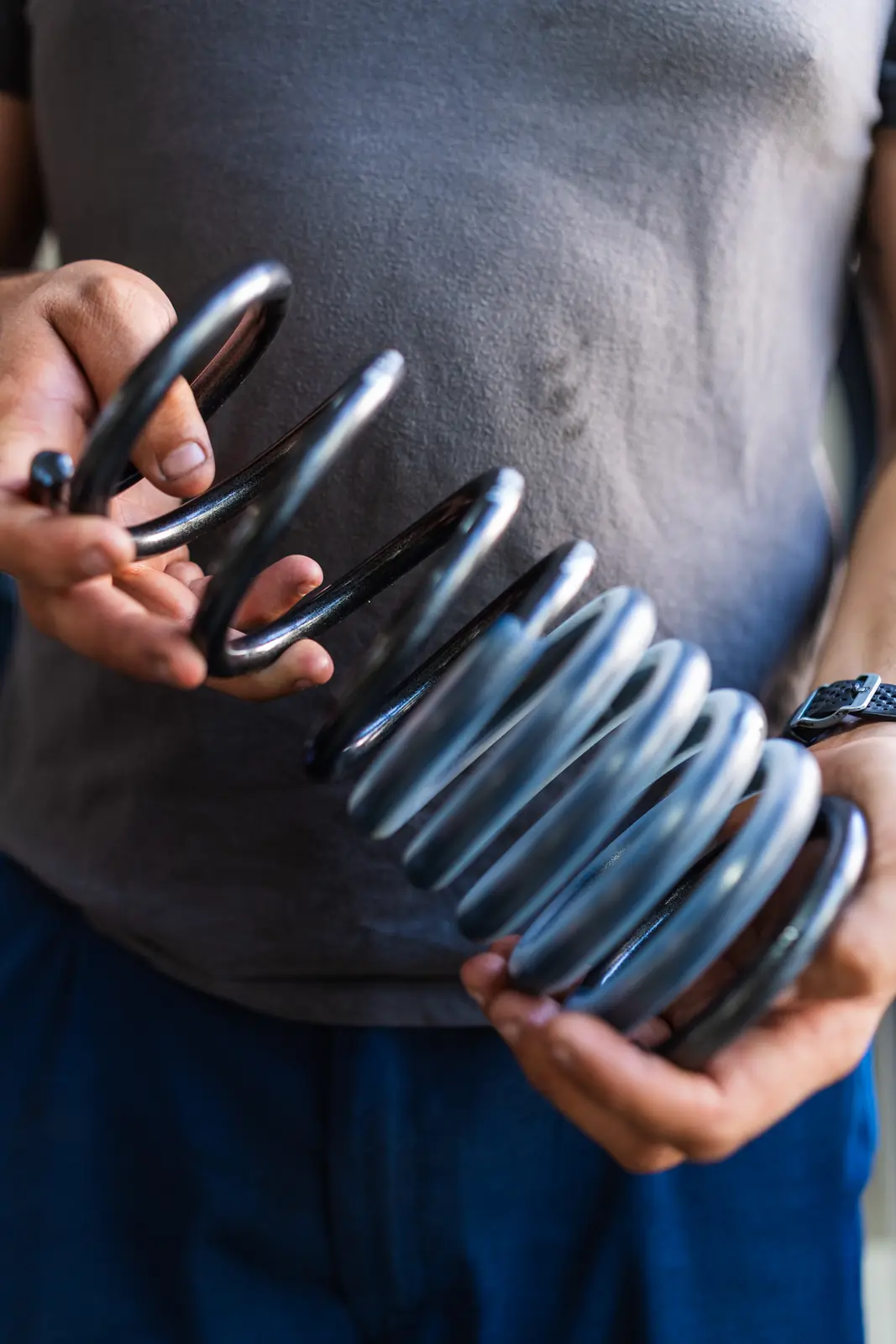
Drums are not one-size-fits-all. The drum size is chosen for the door's height and weight, and it must work together with the springs, which are wound to a specific number of turns. Putting the wrong drum on a door changes how much cable is taken up and how the springs balance the weight.
| Drum Type | Typical Use | Notes |
|---|---|---|
| Standard 4-inch drum | Common residential doors up to about 8 feet tall | Most common drum on 8x7 and 16x7 doors |
| Larger standard drum | Taller residential doors | More cable capacity for added height |
| Low-headroom drum | Garages with limited space above the door | Used with special low-headroom track; cable runs differently |
| High-lift or vertical-lift drum | Raised track for car lifts or tall storage | Tapered profile; requires careful spring calculation |
Drums also come in left- and right-hand versions, and they must be installed on the correct sides. We confirm drum type, door height, track configuration and cable length before ordering or installing parts, so the door balances properly when we are done.
Signs of Trouble
How Cable DrumsFail Over Time
Drums are sturdy, but they are not immune to wear. These are the most common failures we see:
- Loose set screws: each drum locks to the shaft with one or two set screws. If they loosen, the drum slips, one cable goes slack, and the door rises crooked.
- Cracked drums: cast aluminum can crack, especially around the hub, after a sudden jolt such as a broken spring or a door dropping hard.
- Worn or chipped grooves: cables that have jumped the grooves can wear or chip the edges, leading to overlapping cable wraps.
- Corrosion: older drums in damp garages can oxidize around the shaft, making adjustments difficult.
- Cable not seated: if a cable has come off the drum, the door may hang on one side only.
A cable coming off its drum is often a sign of a deeper issue, such as a broken spring, a door that hit something on the way down, or a cable that went slack when the door was frozen to the floor. We find that cause before we put the door back in service.
Our Process
How We HandleYour Drum Replacement
Secure the Door
We clamp the door in place and unplug the opener so nothing moves while we inspect the system.
Inspect the System
We check drums, cables, springs, shaft and bearings to find the cause of the failure.
Unwind the Springs
Using proper winding bars, we fully release torsion spring tension before removing any drum.
Install New Drums
We fit correctly sized left and right drums, thread new cables if needed and tighten the set screws.
Rewind and Balance
We rewind the springs, set equal cable tension and confirm the door is level and balanced.
Test Safety Features
We run the door through full cycles and test the opener's force, limits and auto-reverse.
Safety Warning
Why Drum Work IsStrictly for Professionals
Drums sit at the point where the springs, shaft and cables all meet, which makes them one of the most dangerous parts of a garage door to work on. Loosening a set screw on a drum while the springs are wound can make the shaft spin violently or let a cable fly loose. Even with the springs unwound, cables under partial load can whip when released.
Replacing a drum usually means fully unwinding the torsion springs with proper winding bars, removing the shaft bearings or sliding the drum off the shaft, installing the new drum, threading and tensioning the cable, and rewinding the springs to the correct number of turns. Using screwdrivers or makeshift bars to wind springs is how people get hurt.
If you see a cable off its drum or a door hanging crooked, do not try to fix it yourself. Leave the door where it is, unplug the opener, keep people clear and call us at (262) 555-0123. We have the tools and training to do this work safely.
Our Process
What a Drum ReplacementVisit Looks Like
We start by checking the full counterbalance system: springs, shaft, center and end bearings, cables and both drums. Often the drum is not the only part that needs attention. A drum that cracked from a broken spring usually means the spring and possibly the cables need replacement too.
Next we clamp the door, unwind the springs and remove the damaged drum. We generally recommend replacing drums as a pair so both sides wind cable at the same diameter and the door lifts level. New cables are often the right call at the same time, since a cable that came off a drum may be kinked or frayed. Our cable replacement service covers that.
With the new drums on, we wind each cable evenly into the grooves, set equal tension on both sides, tighten the set screws to the proper torque and rewind the springs. Then we balance the door so it stays put when stopped halfway, and we test the opener's force, limits and safety reversal.
Winter Problems
Cold Weather andSlipping Cables
Some of our busiest drum calls in Menomonee Falls come during January and February. When the bottom seal freezes to the concrete overnight, the opener tries to lift a door that will not move. The springs unwind and the drums turn, but the door stays put, so the cables go slack and can jump off the drums.
When the door finally breaks free, it can jerk or drop with the cables tangled or wrapped outside the grooves. This is one of the most common causes of a door hanging crooked on a cold morning. It also strains drums, cables and springs that are already brittle from sub-zero temperatures.
To reduce the risk, keep the floor along the door clear of snow and ice, and if you suspect the door is frozen, free the bottom seal gently before using the opener. Replacing a worn bottom seal and keeping your springs in good condition also helps.
System Check
Parts That WorkAlongside Your Drums
Because drums are part of the counterbalance system, we look at every connected component while we are there:
- Torsion springs: we check their condition and cycle life and verify that they are sized correctly for the door's weight.
- Shaft and bearings: a bent shaft or worn end bearing plates can make drums wobble and cables wear unevenly.
- Lift cables: we look for fraying, rust and kinks, especially near the bottom brackets where salt and moisture collect.
- Bottom brackets and rollers: these anchor the cables at the door. Worn rollers here may need roller replacement.
A balanced, well-maintained system protects your opener too. When the door is properly counterbalanced, the opener only needs to guide it, not lift it, which extends the life of the motor, gears and belt or chain.
Local Service
Drum and Cable RepairAcross the Area
Menomonee Falls has a wide mix of torsion systems, from older doors on 1960s split-levels that were converted from extension springs to newer insulated doors in subdivisions near Pilgrim Road and the Highway 41/45 corridor. Some older garages have low headroom that calls for special drums and track, while newer homes may have taller 8-foot doors that need larger drums.
We carry common drum sizes, cables and set screws on the truck so many repairs can be finished in a single visit. When a special drum is needed, we will tell you right away and secure the door safely until the part arrives.
Along with Menomonee Falls, we handle drum and cable repairs in Germantown, Sussex, Lannon, Butler, Brookfield, Mequon, Hubertus and northwest Milwaukee. If your door is stuck or hanging crooked, our same-day repair service can help.