Start Here
Why the Material MattersMore Than You Might Think
Two garage doors can look almost identical from the street and behave completely differently over twenty years. One shrugs off a hailstorm and a decade of salt spray. The other dents when a basketball hits it, swells every August and needs paint every few summers.
Material affects five things you will live with: durability, maintenance, insulation, weight and appearance. Weight is the one most people overlook. A heavier door needs larger torsion springs, sturdier hardware and an opener with enough power, and all of that affects the cost of the installation and future repairs.
Our climate also narrows the field. Menomonee Falls sees sub-zero cold snaps, heavy road salt, freeze-thaw cycles every spring and muggy summers. A material that performs beautifully in Arizona may not be the best pick on a north-facing garage near the Menomonee River.
When To Call
Signs You NeedGarage Door Materials
- Steel door rusting at the bottom
- Wood door swelling or rotting
- Thin panels dent at the slightest bump
- Attached garage feels freezing
- Door is loud and rattles
- Paint peeling every few years
- Fiberglass faded or cracking
Steel
Steel Garage Doors:The Practical Favorite
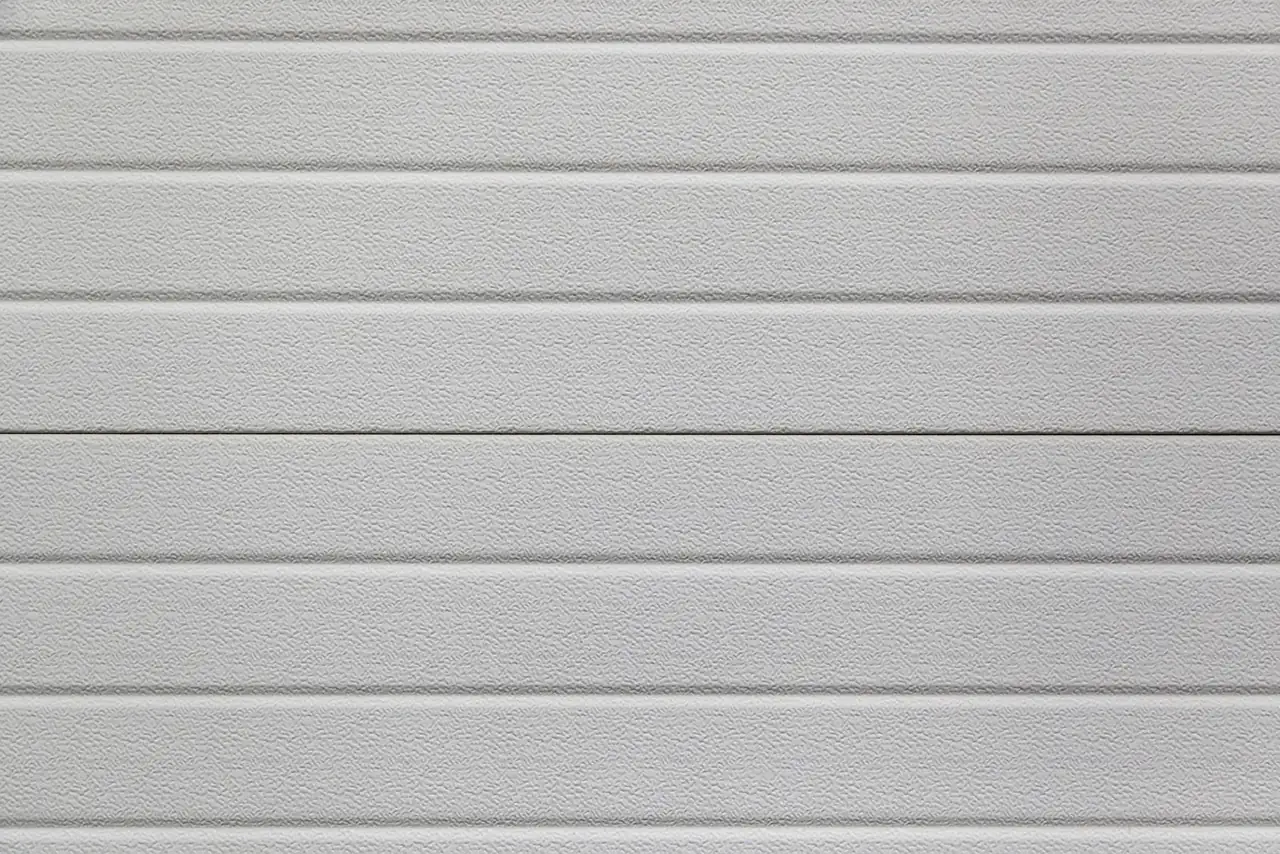
Steel is by far the most common residential garage door material, and in our service area it covers most of the doors we install. It is strong, relatively affordable and needs very little maintenance.
Steel doors come in three basic constructions:
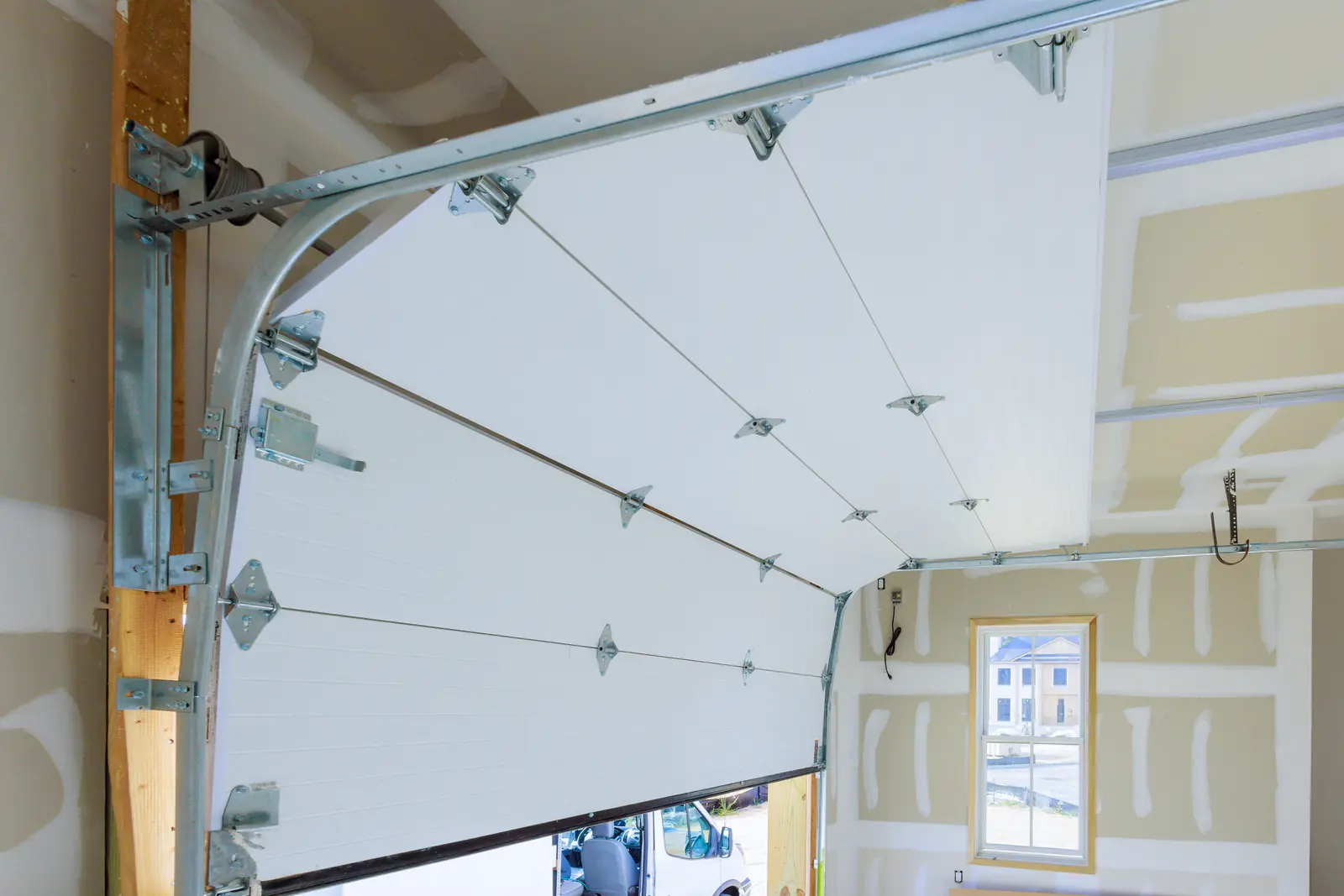
- Single-layer. One steel skin with no backing. Light and inexpensive, but it dents easily, offers no insulation and can be noisy.
- Two-layer. A steel skin with insulation bonded to the back, usually polystyrene with a vinyl or paper backing. Quieter and slightly warmer.
- Three-layer. Insulation sandwiched between two steel skins. This is the most rigid and best insulated option, and the one we recommend for most attached garages.
Steel thickness is measured in gauge, and a lower number means thicker steel. A 24-gauge skin resists dents noticeably better than a 27- or 28-gauge skin. When comparing quotes, ask about gauge as well as layers.
The main weakness of steel is rust. Factory finishes are galvanized and baked on, but a deep scratch or a dent that cracks the paint lets moisture in. Salt slush collecting at the bottom section speeds this up. Touching up chips and rinsing the lower panel in winter goes a long way.
Wood
Real Wood Doors:Beautiful, With Upkeep
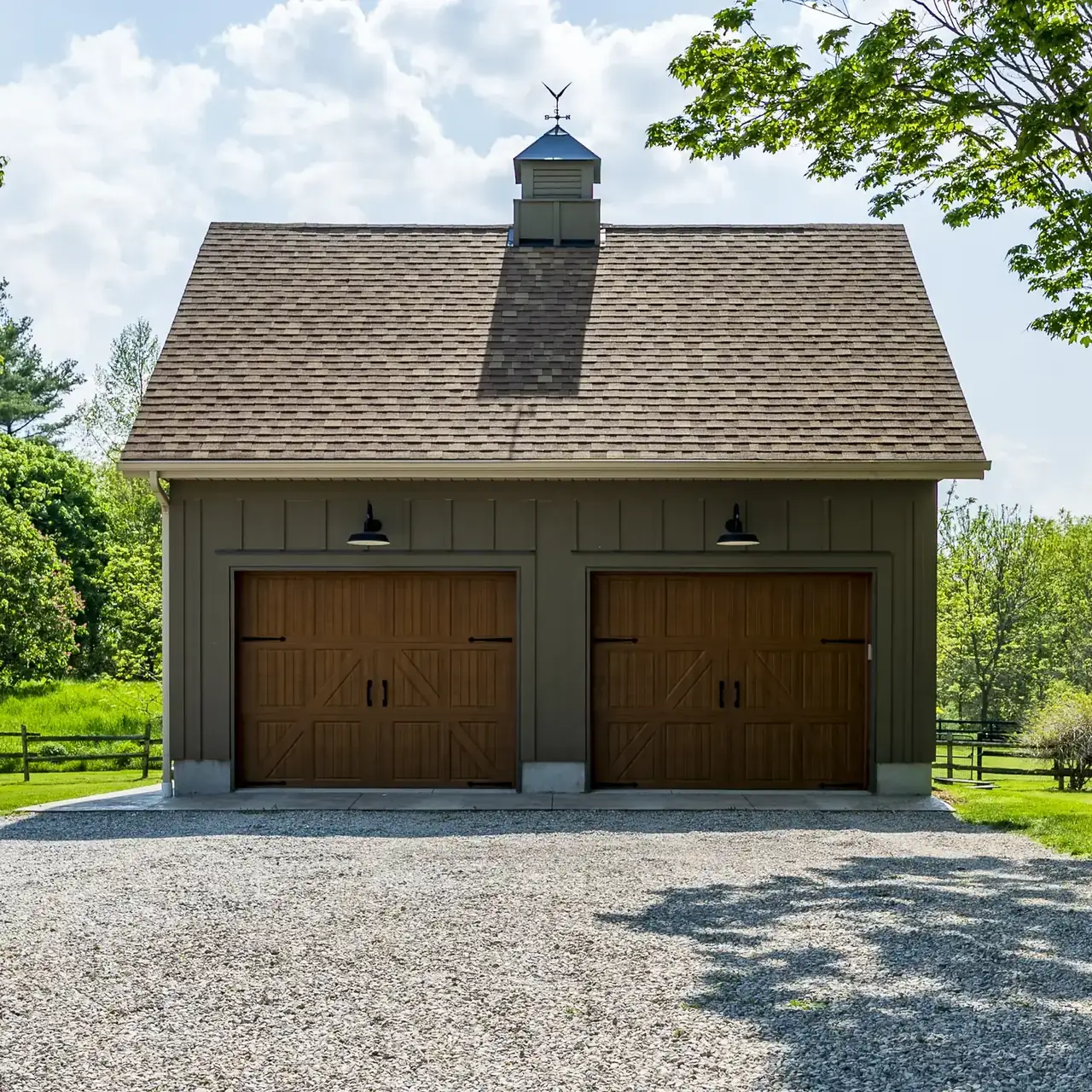
Nothing quite matches the depth and grain of a real wood garage door. Cedar, hemlock, redwood and other species are popular on craftsman homes, lake houses and historic properties. Wood can be stained, painted or built into almost any design, which is why it shows up in many custom garage doors.
The trade-off is maintenance. Wood moves with moisture. It swells in humid summer weather and shrinks in dry winter air, and over time that movement can open joints and crack finishes. Most wood doors need to be refinished on a regular schedule, typically every few years depending on sun exposure and the finish used.
Wood doors are also heavy. A solid wood double door can weigh significantly more than an insulated steel door of the same size, so springs, cables, drums and the opener all have to be sized accordingly. If you are replacing an older wood door that has started to rot at the bottom rail, we can help you decide whether repair, a matching new wood door or a wood-look alternative makes more sense.
Our Process
How We HandleYour Garage Door Materials
Talk About Your Garage
We ask how you use the space, whether it is attached or heated, and what look you want for your Menomonee Falls home.
Compare Samples
We bring material samples and finish options so you can see and feel the difference between steel gauges, composites and wood.
Measure and Spec
We measure the opening and confirm the door weight so springs, cables and the opener are sized correctly.
Written Quote
You get a clear quote listing the material, construction, insulation and hardware included.
Professional Installation
We install and balance the new door, fit the seals and recalibrate your opener for the new weight.
Composite
Wood Composite andWood-Look Steel
Many homeowners want the warmth of wood without the refinishing schedule. Two materials fill that gap.
Wood composite doors use a molded skin made from wood fibers and resins, usually over a steel frame or an insulated core. They can be cut and textured to look like real wood, take paint well and resist rot, splitting and insect damage far better than solid lumber.
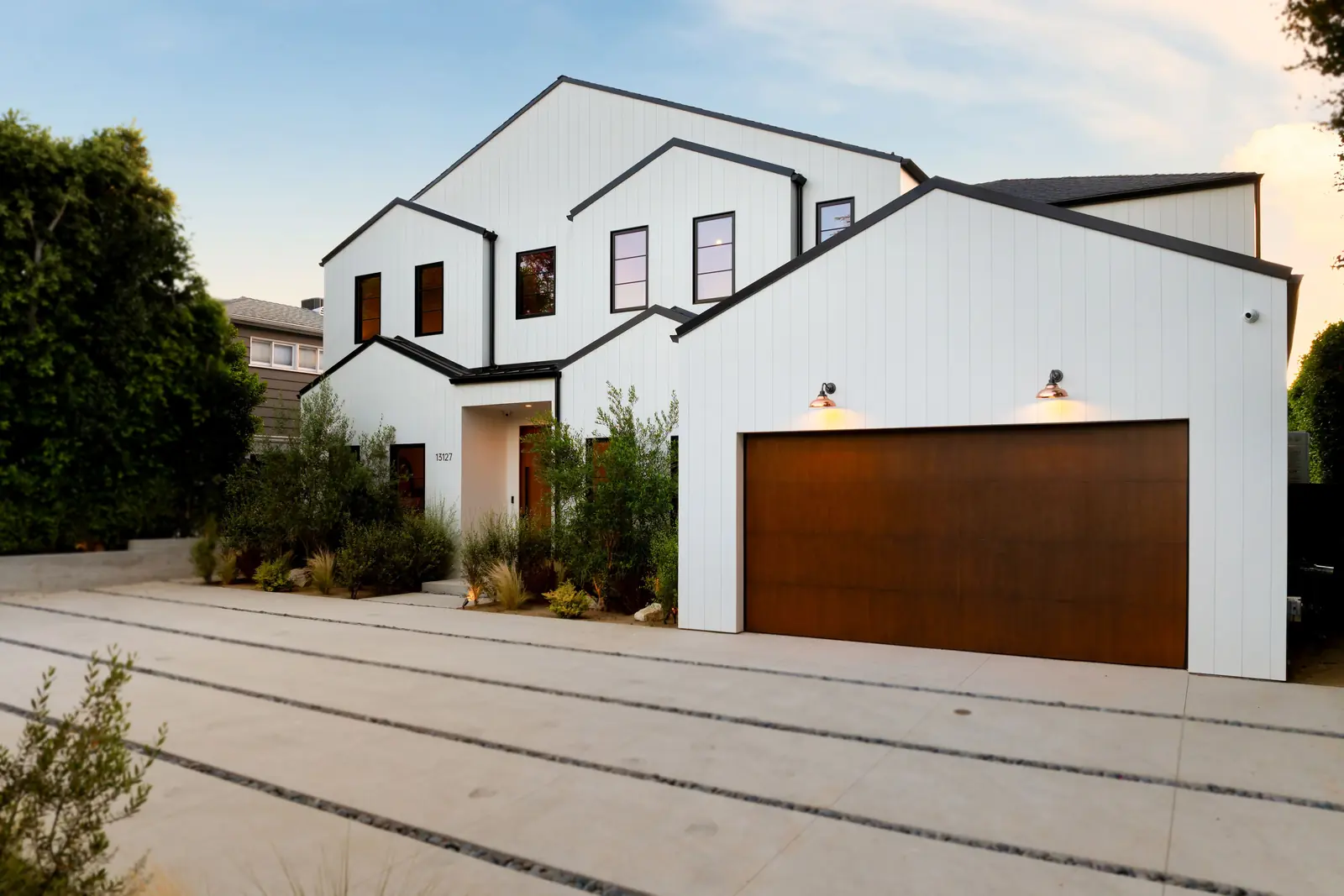
Wood-look steel doors use a printed or laminated finish over a steel skin. Up close they will not fool everyone, but from the driveway the grain pattern is convincing. They carry all the durability and low maintenance of steel.
Both options are good choices for carriage-house designs on newer subdivision homes, where the look of wood ties into the trim and porch but nobody wants to sand and stain a sixteen-foot door every few summers. You can see how these finishes fit different home designs on our garage door styles page.
Glass and More
Aluminum, Glassand Fiberglass Doors
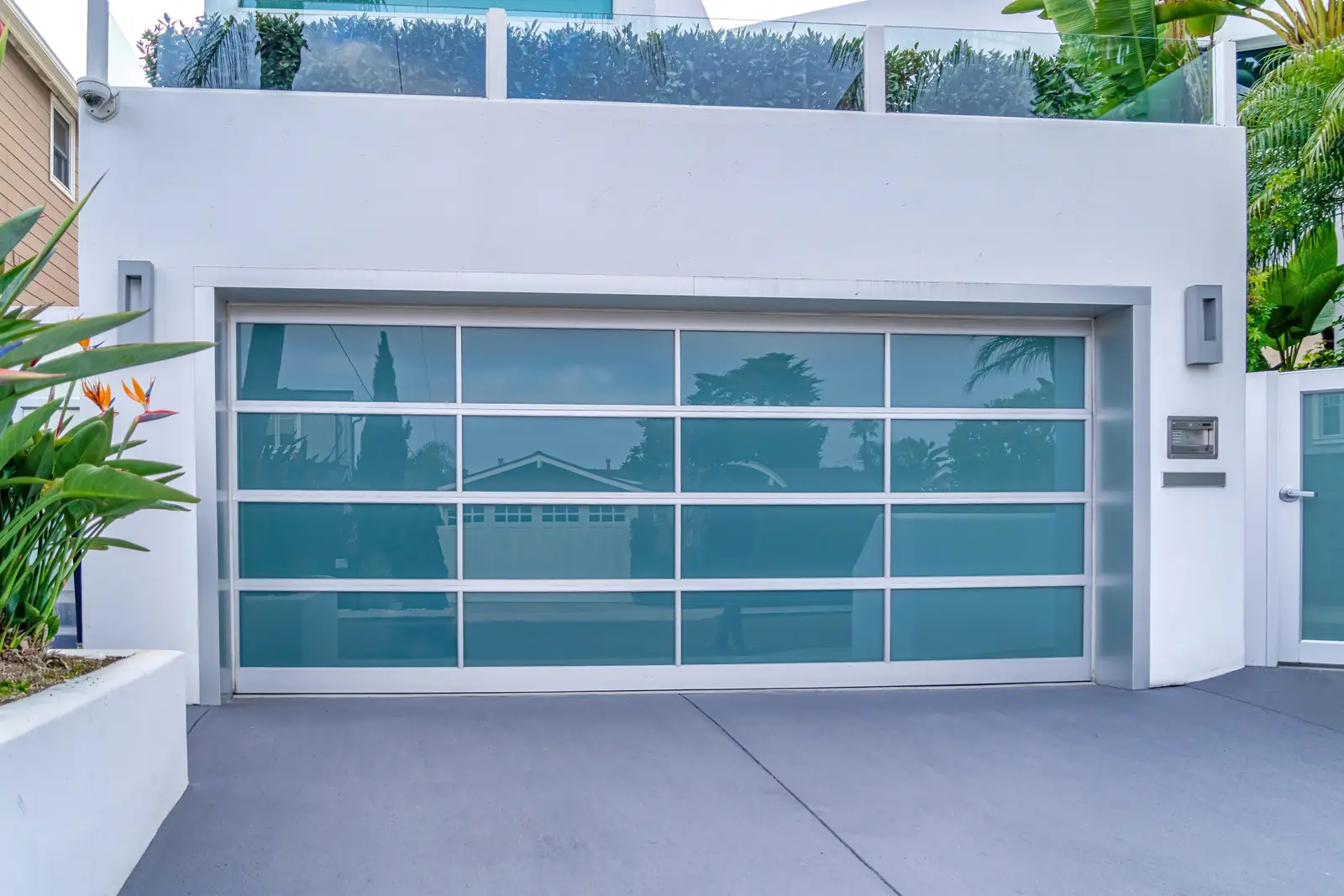
Aluminum and glass. Full-view doors use aluminum frames with large glass or polycarbonate panels. They suit modern homes and are often used where a garage doubles as a gym, studio or entertaining space. Aluminum does not rust, which helps against road salt, but thin aluminum dents more easily than steel and single-pane glass offers little insulation. Insulated glass and thermally broken frames improve that.
Tempered versus other glass. Garage door glass should be tempered or laminated for safety. Frosted, obscure and tinted options give you light without putting your garage contents on display.
Fiberglass. Fiberglass skins over a steel frame and insulated core resist dents, salt and moisture well and can be molded with a wood grain texture. Fiberglass can become brittle in extreme cold and may fade in strong sun over many years, so it is a less common choice locally, but it works well in some coastal-style and lake-area homes.
Vinyl. Vinyl doors are very dent-resistant and nearly maintenance-free. Color choices are usually more limited, and like fiberglass, vinyl becomes stiffer in deep cold.
Side by Side
Comparing Garage DoorMaterials at a Glance
The table below sums up how the common materials behave in our climate. It is a general guide, since quality varies a lot within each category.
| Material | Durability | Maintenance | Insulation Potential | Relative Weight |
|---|---|---|---|---|
| Steel (three-layer) | High | Low | Good to very good | Moderate |
| Steel (single-layer) | Fair, dents easily | Low | None | Light |
| Solid wood | Good with care | High | Fair | Heavy |
| Wood composite | High | Low to moderate | Good | Moderate to heavy |
| Aluminum and glass | Fair to good | Low | Low to fair | Light to moderate |
| Fiberglass | Good | Low | Good | Moderate |
If you are still torn, think about how you use the garage. A detached garage that holds a lawn mower has very different needs than an attached, heated two-car garage with a bonus room above it.
Insulation
Insulation Cores andWhat R-Value Really Means
R-value measures how well a material resists heat flow. A higher number means better insulation. For garage doors, R-value depends mostly on the core material and its thickness.
Polystyrene comes in rigid panels cut to fit inside each section. It is affordable and effective, but there can be small gaps at the edges. Polyurethane is foamed into the door and expands to fill every corner, bonding to both skins. Inch for inch it insulates better and makes the door stiffer.
Keep in mind that published R-values describe the section itself, not the whole installed door. Gaps at the jambs, a worn bottom seal or an uneven floor can let in more cold than the panels keep out. That is why good installation matters just as much as the material. When we handle your garage door installation, we fit perimeter seals and a bottom astragal to match your floor.
Insulation also quiets a door. A three-layer insulated door makes much less rattle and boom than a single-layer door, which you will appreciate if a bedroom sits above the garage.
Repair Impact
How Material AffectsSprings, Openers and Repairs
Every material choice ripples through the rest of the system. A heavier door needs torsion springs with a larger wire size or longer length to balance it, and stronger cables and drums to carry the load. Lighter doors can use smaller springs but may need reinforcing struts, especially in wide 16-foot sizes, to keep them from bowing.
If you switch materials, for example from an old lightweight single-layer steel door to a heavy wood carriage door, the springs must be recalculated. Reusing the old springs will leave the door out of balance, which strains the opener and wears parts fast. Spring sizing and winding is not a DIY job; the stored energy can cause serious injury.
Material also affects what a future repair looks like. Steel and composite sections can often be replaced individually through our panel replacement service, as long as the design is still available. Custom wood sections usually need to be built to match. We are happy to talk through repair costs over the life of the door when you are choosing.