The Basics
What a Garage DoorPanel Really Is
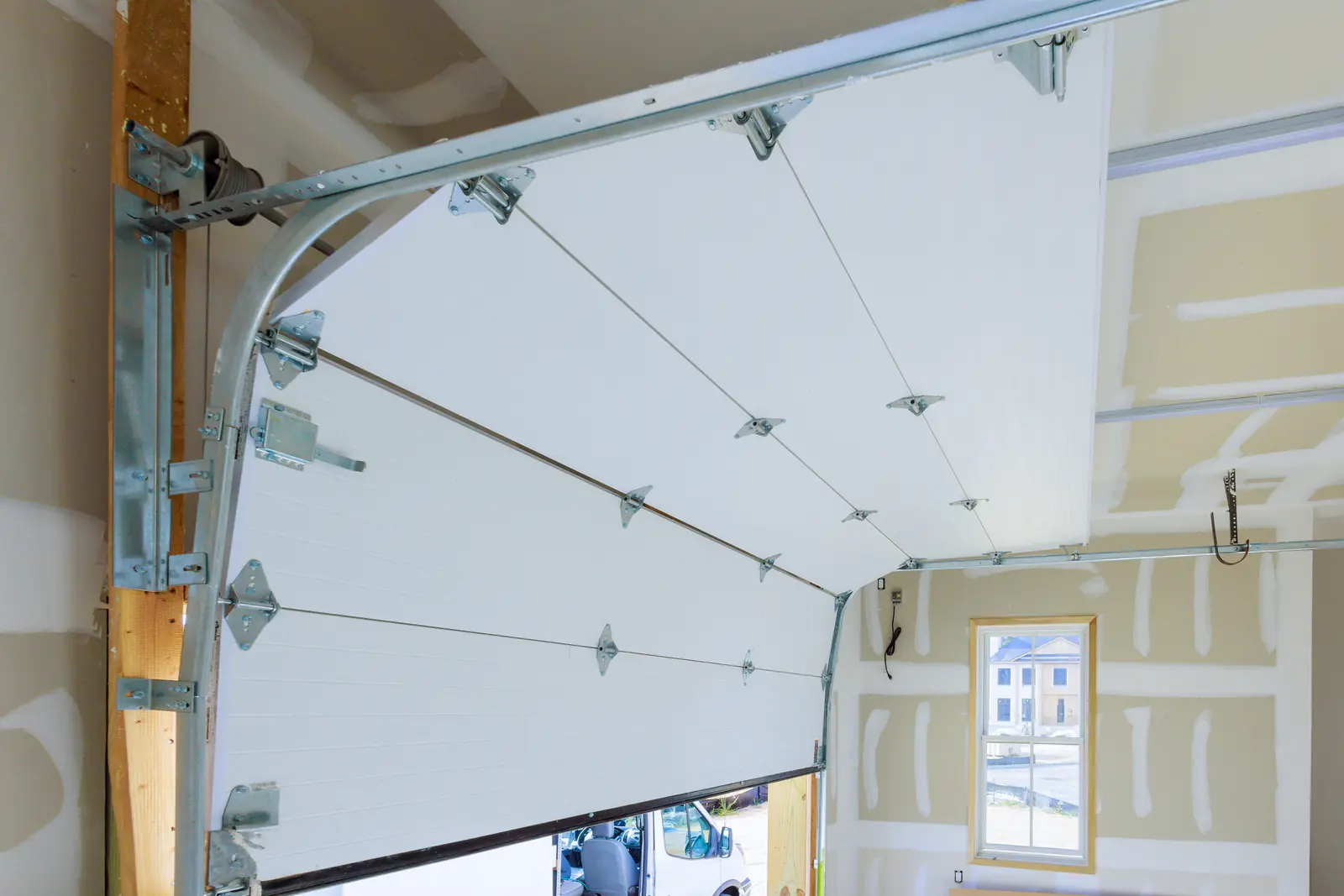
Most residential garage doors are sectional doors made of four or five horizontal sections stacked on top of each other and joined by hinges. Homeowners often call these sections panels, and that is how we use the word here. On a raised-panel or carriage-house style door, each section also has decorative embossed areas, which people sometimes call panels too.
Each section is built as a unit. On a steel door, it is a formed steel skin with internal stiffeners, and on insulated doors it includes polystyrene or polyurethane foam, sometimes with a second steel skin on the back. The hinges, end stiles and roller brackets attach to it. That is why panel replacement means swapping a whole section, not patching one rectangle of steel.
Because sections are made to fit a specific door model, size and design, the key question is always whether we can get a matching section. That depends on the manufacturer, the age of the door and the exact style and color.
When To Call
Signs You NeedPanel Replacement
- A creased or folded section after an impact
- Cracks along a section seam or hinge line
- Bottom section rusted through from road salt
- Rotted bottom rail on a wood door
- Door binds where a section is bent
- Gap at the floor from a warped section
- Light or drafts showing between sections
Repair or Replace
When a New Section MakesSense and When It Does Not
Not every damaged section needs replacing, and not every door is worth repairing. We look at the damage, the age of the door and parts availability before recommending anything.
| Situation | Our Usual Recommendation |
|---|---|
| Small dent, no crease, door runs fine | Leave it or try minor dent repair; no section needed |
| One section creased, cracked or buckled, door model still made | Replace the single section |
| Bottom section rotted or rusted through | Replace bottom section and bottom seal |
| Two or more sections badly damaged | Compare section cost to a new door |
| Door discontinued or 20+ years old | New door is usually the better value |
A crease across the width of a section is more than cosmetic. It weakens the section so it can fold when the door rolls into the horizontal track, and it can throw rollers out of alignment. Those are the cases where replacing the section, not just ignoring it, protects the rest of the door.
Common Causes
How Garage Door SectionsUsually Get Damaged
Most of the panel calls we get in Menomonee Falls fall into a few familiar patterns:
- Vehicle impacts: backing out before the door is fully open, or a teenager learning to drive, usually hits the bottom two sections.
- Opener closing on an object: a trash can or bike under the door can bend the bottom section if the reversal settings are off.
- Overhead damage: a door pulled down unevenly, or one that came off its track, can buckle the upper sections.
- Rust and rot: road salt and standing slush eat away at the bottom of steel doors, while moisture rots the bottom rails on wood doors.
- Kids and sports: repeated hits from basketballs and hockey pucks dent thinner, non-insulated steel over time.
After any impact, it is smart to stop using the door until it has been looked at. A section that has bent can bind in the track, and running it with the opener can bend the next section or snap a cable.
Our Process
How We HandleYour Panel Replacement
Assess the Damage
We inspect the damaged section, the hinges, track and cables, and check whether the door can run safely.
Identify Your Door
We record the manufacturer, model, size, insulation and color so the right replacement section can be ordered.
Give You Options
You get a clear recommendation on section replacement versus a new door, with honest pricing.
Swap the Section Safely
With spring tension released and the door supported, we remove the damaged section and install the new one with sound hardware.
Seal, Balance and Test
We fit a new bottom seal if needed, rebalance the springs and test the opener's safety features.
Matching Your Door
Finding a Section ThatActually Matches
To order a replacement section, we need to know the manufacturer, model, size and design of your door. Many doors have a label on an end stile or the inside of a section showing the brand and model. If the label is gone, we can often identify the door by its construction, embossing pattern and hinge layout.
Sizes matter more than people expect. A 16x7 and a 16x8 door use different section heights or counts, and a 9x7 single door uses different widths than an 8x7. Even within one model, there can be options for window sections, insulation thickness and color.
Color is the trickiest part. A brand-new white section next to sections that have been in the sun for fifteen years may look slightly different, especially on south- and west-facing doors. Painting the whole door with an exterior-grade paint suited to steel is often the easiest way to make the repair disappear. We will tell you up front if we expect a visible color difference.
Insulated Doors
Keeping Your R-Valueand Weather Seal Intact
If you have an insulated door, the replacement section should match your door's insulation type and thickness. Mixing a non-insulated section into an insulated door creates a cold spot and changes the door's weight, which affects spring balance. On attached garages, a poorly sealed section also means cold air working its way toward the house during January cold snaps.
Bottom sections deserve extra attention in Wisconsin. They take the brunt of snow, ice, slush and salt, and they hold the bottom weather seal. When we replace a bottom section, we install a new bottom seal and retainer as needed so the door closes tight to the floor and does not freeze to the concrete as easily.
Because a new section can weigh a little more or less than the old one, we always rebalance the springs afterward. A door that is out of balance makes the opener work harder and wears out rollers and cables faster. If your springs are near the end of their cycle rating, we will tell you, and our spring replacement service can handle it in the same visit.
Safety First
Why Section Swaps NeedProfessional Hands
Replacing a section means taking the door partially apart while it is still connected to a counterbalance system. On a torsion spring door, the bottom section holds the lift cables, and the springs are wound to carry the full weight of the door. Removing sections in the wrong order, or with tension still on the cables, can cause the door or hardware to move violently.
We release spring tension, support the door, and remove sections from the top down or bottom up depending on which one is damaged. Upper sections can sometimes be swapped with the door clamped in place; bottom sections always involve the cables and bottom brackets. This is not a project to take on with a YouTube video and a socket set.
If the cables were stretched or frayed when the section got hit, we replace them too. Damaged cables are easy to miss and are a common cause of a door hanging crooked after a repair. Our cable repair work is done to the same safety standards.
Along the Way
Hardware We ReplaceWith the Section
A new section usually arrives as a bare section, so the hinges, end brackets and roller hardware need to be moved over or replaced. We check every piece as it comes off. Hinges on an impacted section are frequently bent, and rollers that were jarred in the track may have cracked wheels or bent stems.
We replace damaged hinges and, where needed, the rollers on that section. If the whole set of rollers is worn, it is a good time to do them all through our roller replacement service. We also inspect the track near the impact point, because a hard hit often bends the vertical track as well as the door.
Finally, we reconnect the cables, rebalance the springs, and test the opener's travel limits, force settings and photo-eye sensors so the door stops and reverses the way it should.
Honest Advice
When a New Door Isthe Smarter Spend
Some older doors in Menomonee Falls, especially on 1960s and 1970s ranches near the Menomonee River and around Lilly Road, are no longer manufactured. When sections are unavailable, a mismatched replacement can look out of place and may not fit the existing hinges and stiles properly.
Likewise, if more than one section is damaged, the door is uninsulated, and you are already thinking about better curb appeal or energy efficiency, putting that money toward a new door often makes more sense. A new insulated steel door can make a noticeable difference in a heated or attached garage.
We will give you both numbers when it is a close call and let you decide. If a new door is the way to go, we can walk you through door materials and styles, then handle the installation from start to finish.