Why Replace
When a New Door MakesMore Sense Than Repair
Most garage door problems are fixable. A snapped spring, a frayed cable or a worn set of rollers is a repair, not a reason to buy a new door, and we will tell you that honestly. Our garage door repair crew fixes far more doors than we replace.
Replacement starts to make sense when the door itself is the problem. That usually means several panels are dented or cracked, the bottom section has rusted through from years of road salt, wood sections are rotting at the joints, or the door is so heavy and poorly built that it keeps wearing out hardware faster than it should.
Older homes are a big part of what we see. Plenty of 1950s through 1970s ranches and split-levels in Menomonee Falls still have their original single-layer steel or hollow wood doors. They are uninsulated, they rattle in a lake-effect wind, and replacement panels for them have often been discontinued. At that point, putting money into the old door is throwing good money after bad.
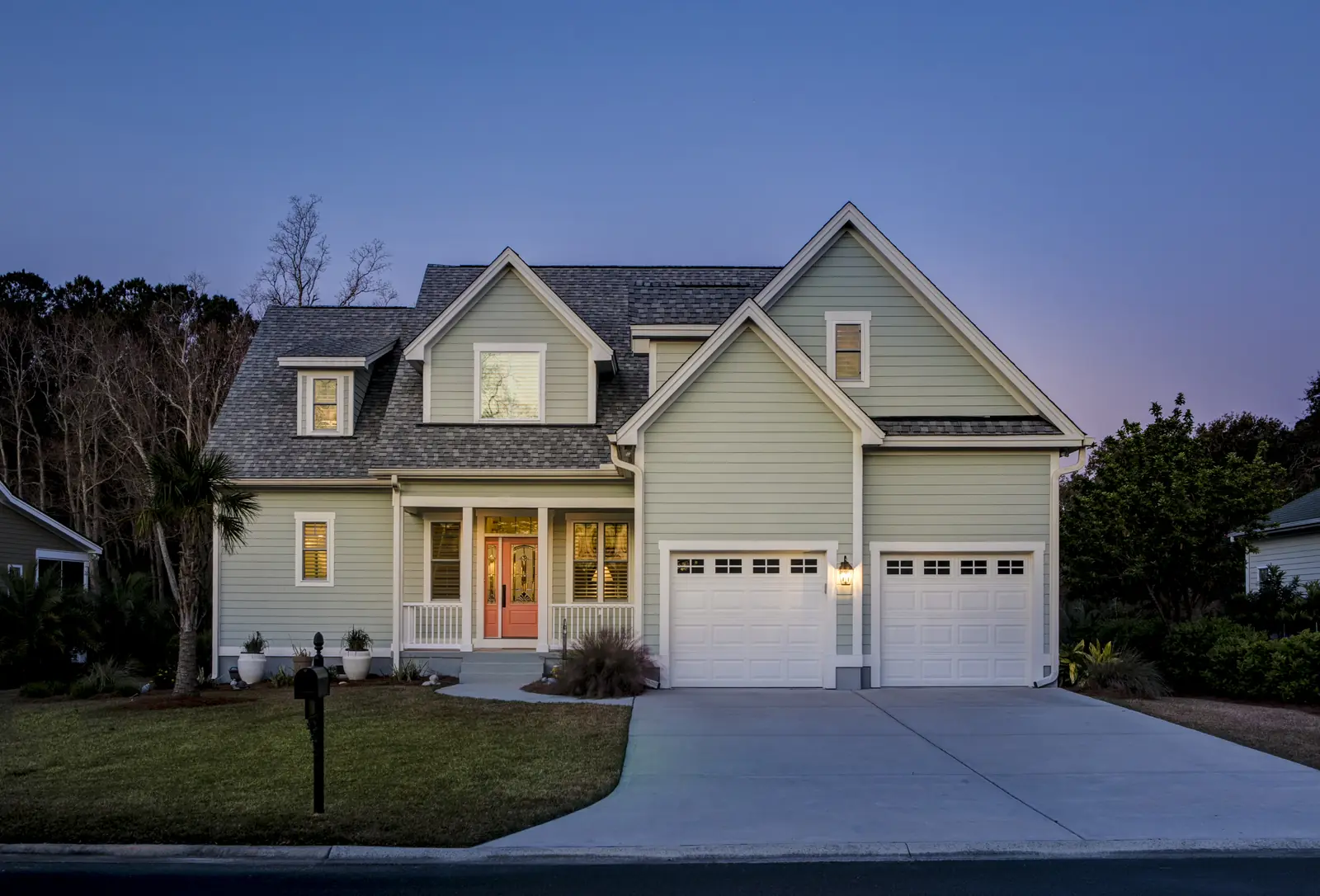
A new door also changes how the front of your house looks. On many homes the garage door covers a third of the street-facing wall, so a replacement is one of the most visible changes you can make for the money.
When To Call
Signs You NeedGarage Door Installation
- Multiple dented or cracked panels
- Bottom section rusted through
- Rotting or warped wood sections
- No insulation on an attached garage
- Replacement parts discontinued
- Door rattles or sags in the wind
- Outdated look hurting curb appeal
- Frequent repairs on the same door
Measuring Right
Accurate MeasurementsCome Before Anything Else
A garage door that is ordered wrong cannot be fixed with a few shims. That is why every installation starts with an on-site visit. We do not quote a new door from a photo or a guess at the size.
Here is what we measure and check:
- Rough opening width and height. Common residential sizes are 8x7 and 9x7 for single-car doors and 16x7 for double doors. Older homes often have 7x7 openings, and some newer builds use 8-foot-tall doors for trucks and SUVs.
- Headroom. The space between the top of the opening and the ceiling decides whether standard track will fit or whether we need low-headroom track.
- Backroom. The depth from the opening to the back wall must clear the horizontal tracks and the opener rail.
- Side room. Each side needs enough wall for the vertical tracks and, for torsion systems, the end bearing plates.
- Jambs and header. We check whether the wood framing around the opening is solid or soft from water damage, because the tracks and spring anchor fasten into it.
- Floor slope. Many older slabs are uneven. We note how much so the bottom seal can be sized to close the gap.
If anything in the opening needs attention first, such as rotted jamb wood or a cracked header, we will point it out before you order rather than surprise you on install day.
Your Options
Choosing the DoorThat Fits Your Home
Once we know the size, we walk you through the choices that actually matter. You will pick a material, a panel design, an insulation level, a color and any windows. We keep the conversation practical: how the door will hold up, how much it weighs, how warm it will keep the garage and how it will look on your house.
Steel is the most common choice in Menomonee Falls for good reason. It is durable, low-maintenance and available in single-layer, two-layer and three-layer construction. For a deeper look at steel, wood, wood composite, aluminum and fiberglass, see our garage door materials guide.
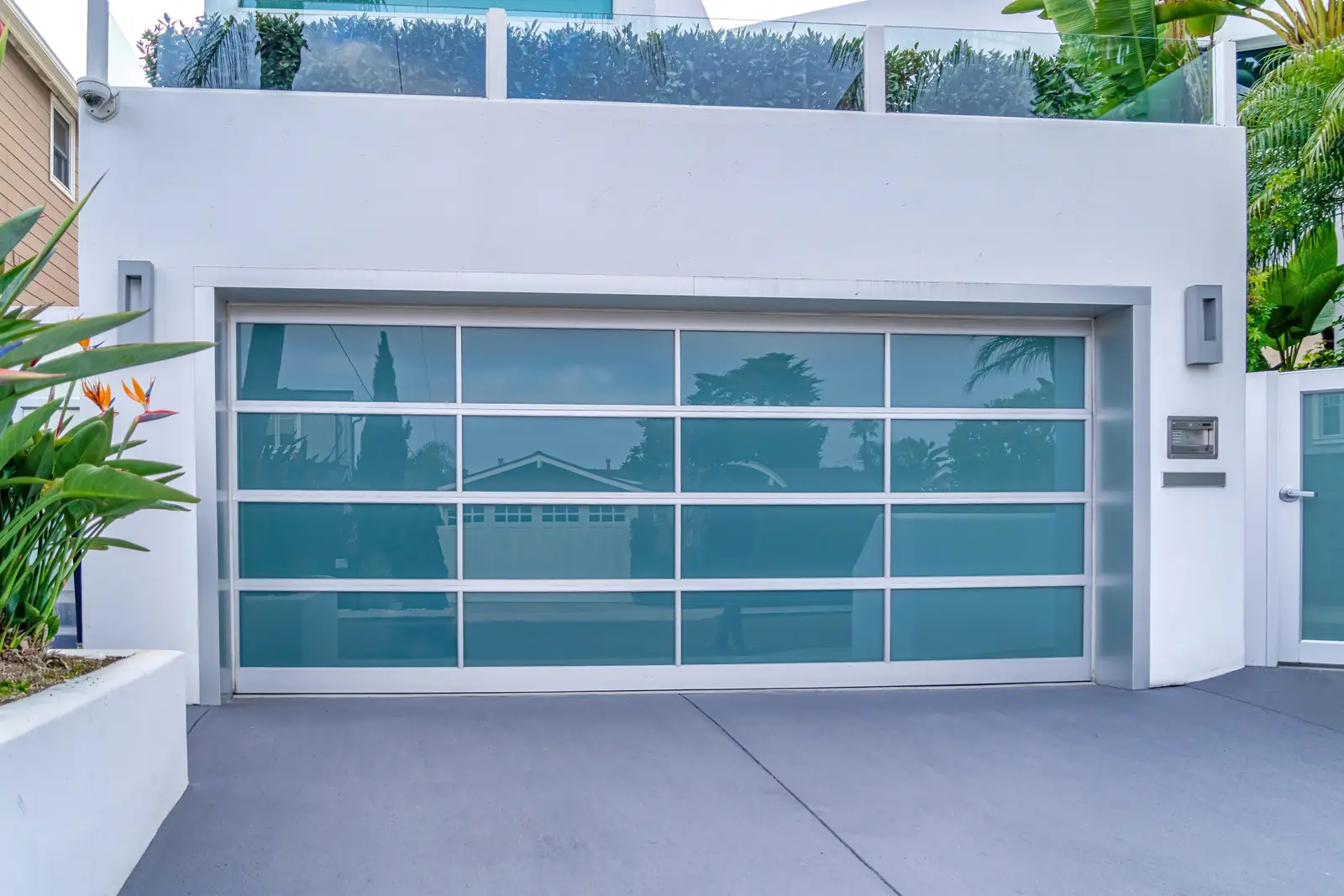
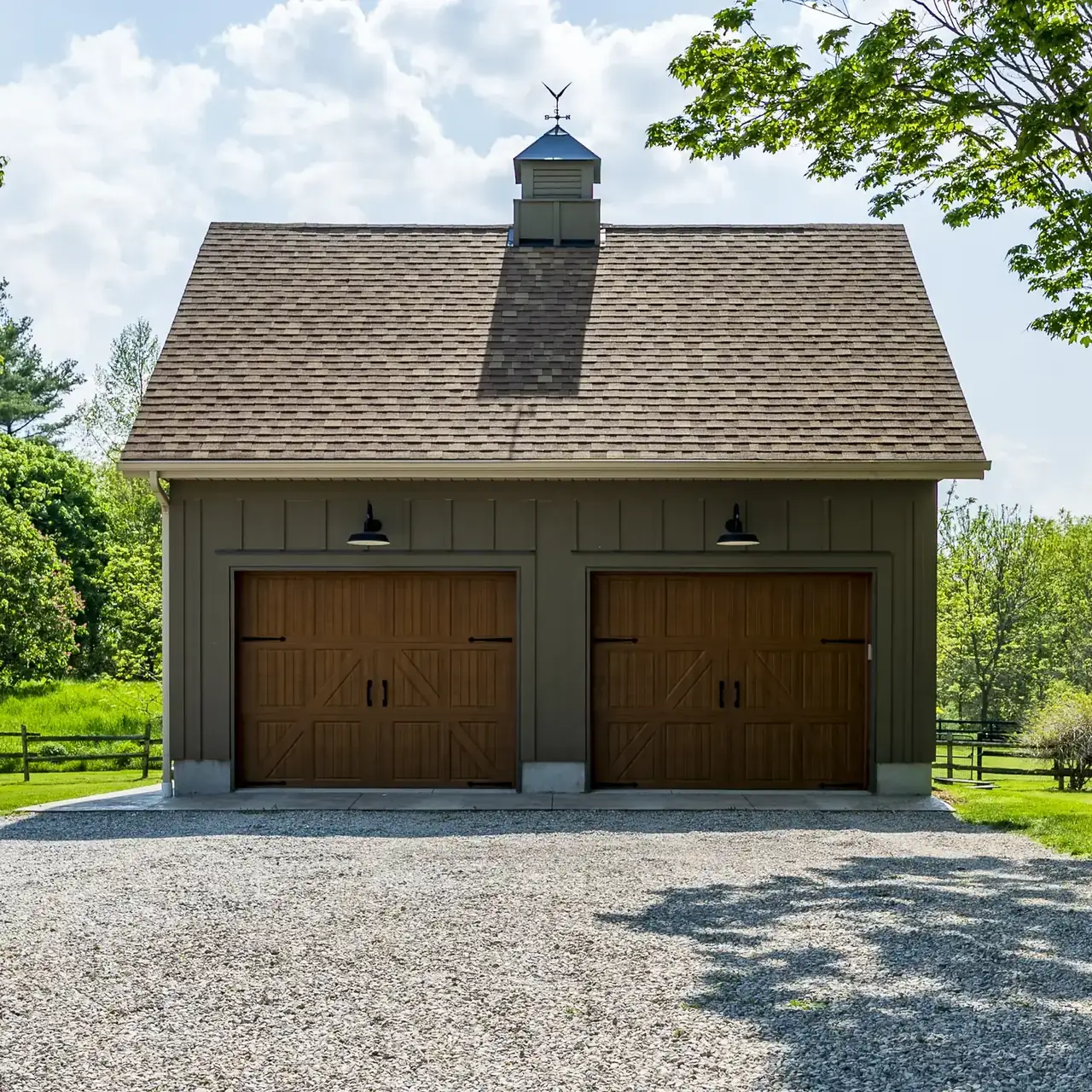
The look of the door is its own decision. Traditional raised panels, flush panels, carriage-house overlays and modern full-view glass all come in different sizes and colors. Our garage door styles page explains how to match a design to a ranch, colonial, craftsman or contemporary home.
If you have an unusual opening or want something no catalog shows, we also handle custom garage doors built to your specifications.
Our Process
How We HandleYour Garage Door Installation
On-Site Measurement
We visit your Menomonee Falls home, measure the opening, headroom, backroom and side room, and check the framing.
Pick Your Door
We go over materials, styles, insulation, colors and windows, then give you a written quote for the door you choose.
Safe Removal
On install day we release spring tension, take down the old door and tracks, and inspect the jambs and header.
Build and Balance
We assemble the new door section by section, install tracks and springs sized to its weight, and balance it by hand.
Seal and Connect
We fit weather stripping and the bottom seal, then reconnect the opener and reset limits, force and photo-eyes.
Walkthrough and Haul-Away
We show you how everything works, answer your questions and take all old materials with us.
Insulation
Insulated Doors forWisconsin Winters
If your garage is attached to the house, or if you use it as a workshop, insulation is worth serious thought. An uninsulated steel door is basically a large sheet of metal between your garage and a January night that can drop well below zero. That cold moves straight into any room that shares a wall or ceiling with the garage.
Insulated doors use either polystyrene panels or injected polyurethane foam between steel skins. Polyurethane is bonded to both skins, so it adds stiffness as well as a higher R-value. A stiffer door resists dents better and rattles less in the wind.
| Construction | Typical Insulation | Best For |
|---|---|---|
| Single-layer steel | None | Detached garages, budget replacements |
| Two-layer steel | Polystyrene backing | Basic noise and dent improvement |
| Three-layer steel, polystyrene core | Moderate R-value | Attached garages, most homes |
| Three-layer steel, polyurethane core | Higher R-value | Heated garages, rooms above the garage |
R-value is only part of the story. A door also needs good weather stripping, a tight bottom seal and properly adjusted perimeter stops. We install all three so the insulation you pay for actually does its job.
Removal
Taking Out the Old DoorSafely and Cleanly
Removing an old garage door is the most dangerous part of the job. The springs that lift the door are wound under high tension, and releasing that tension wrong is how people get hurt. Please do not try to remove a door with torsion or extension springs yourself.
On a torsion system, we unwind the springs with proper winding bars, one quarter turn at a time, until there is no stored energy left. On older extension spring systems, we lower the door fully so the springs relax, then confirm safety cables are present before disconnecting anything. Many older doors in the area were installed without containment cables, which is one more reason to let a trained tech handle the teardown.
After the tension is gone, we disconnect the opener, remove the sections one at a time, take down the old tracks and hardware, and inspect the jambs and header. All of the old door, springs, tracks and packaging leave with us. You will not be left with a pile of panels at the curb.
Installation
How We Build theNew Door in Place
A garage door is assembled in the opening, section by section. The order and the small adjustments along the way decide whether the door runs quietly for years or fights its opener from day one.
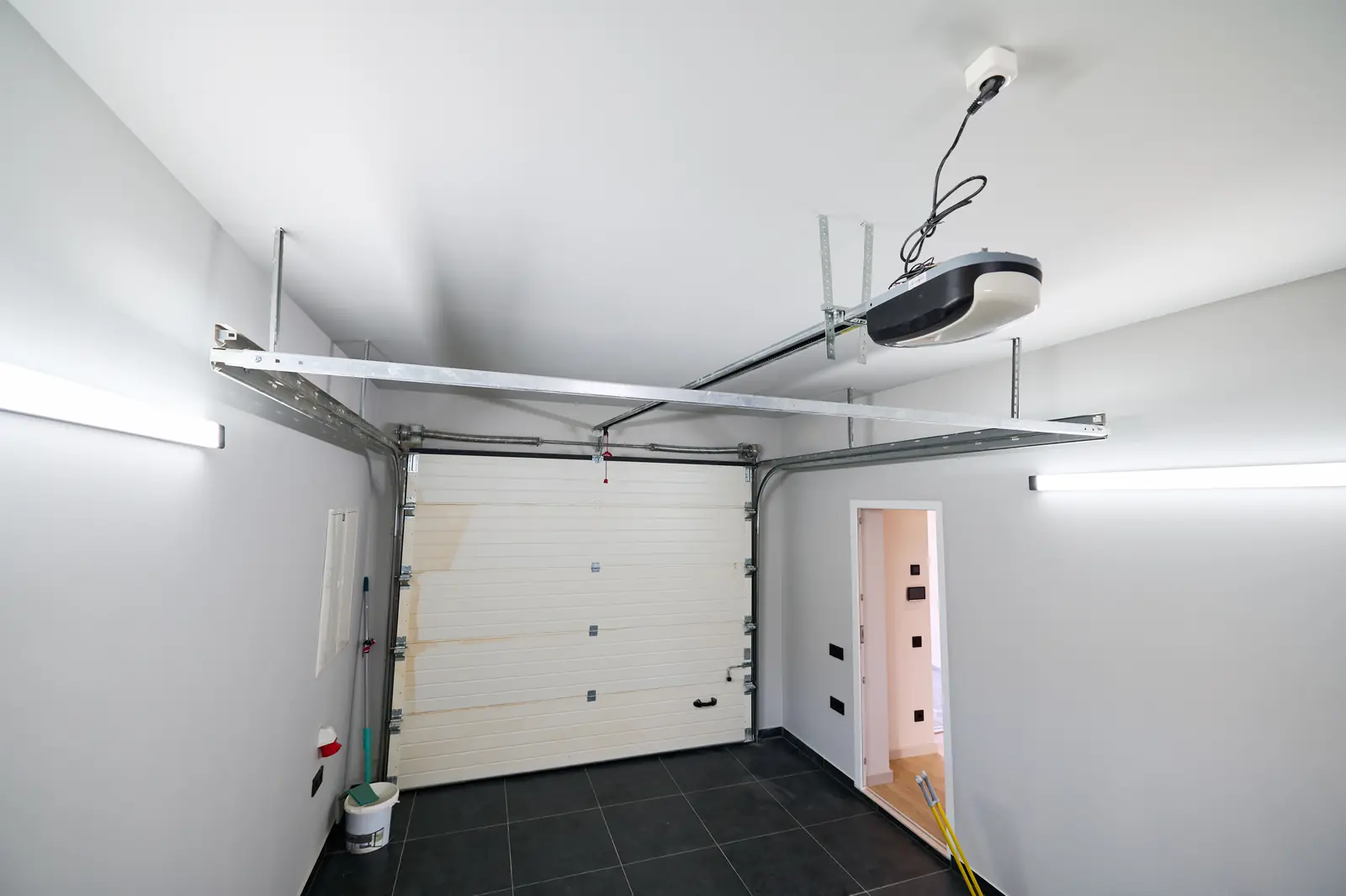
We set the bottom section level first, even if the floor is not, then stack each section and fasten the hinges. The vertical tracks are plumbed and fastened to the jambs with the correct gap so the rollers ride freely without binding. Horizontal tracks are hung from the ceiling with rear supports and set with a slight upward pitch toward the back of the garage.
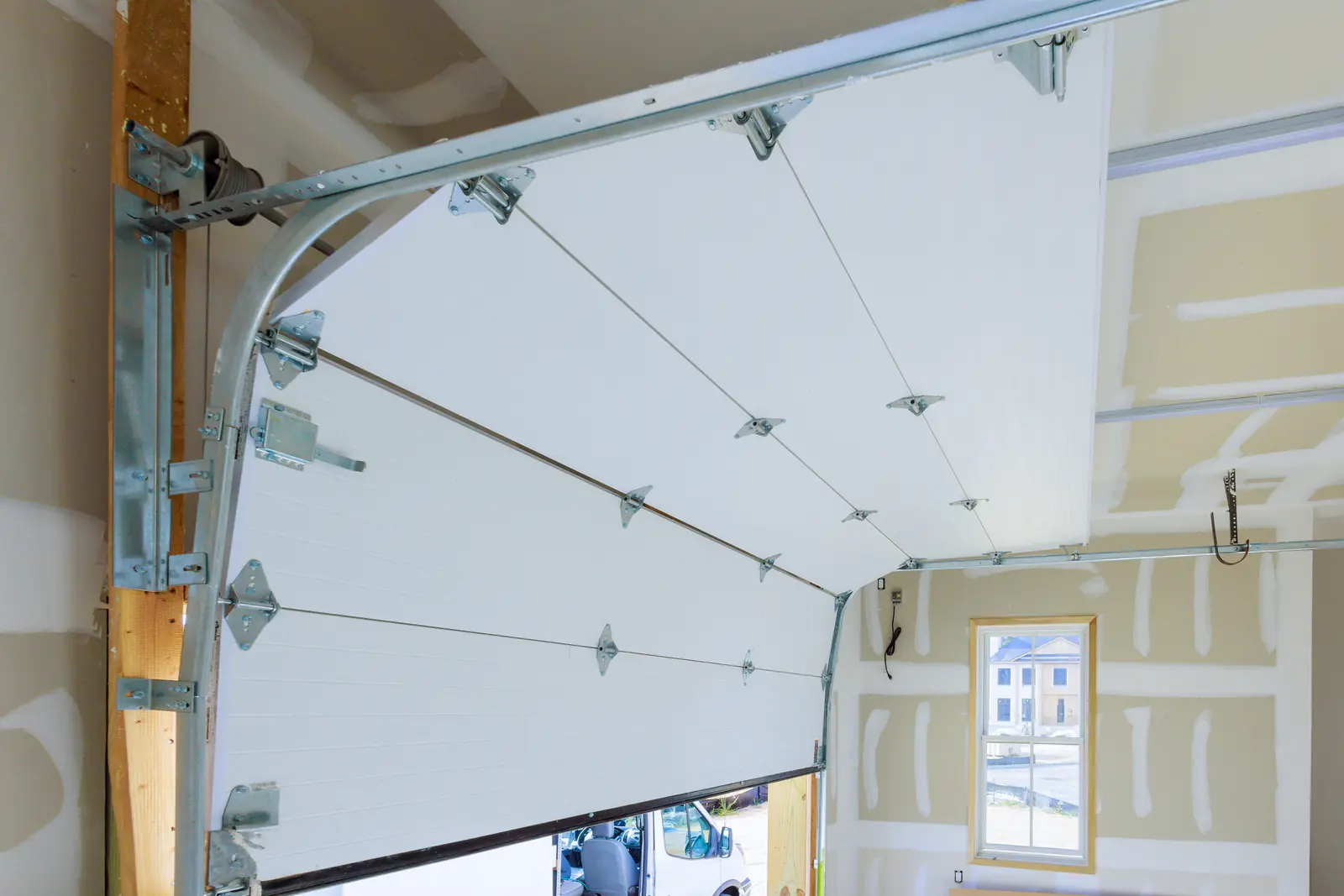
Next comes the counterbalance system. Most new doors use torsion springs mounted on a shaft above the opening, with cable drums on each end. Spring size is calculated from the actual door weight, height and drum size, not picked off a shelf. We wind the springs to the correct number of turns, then fine-tune until the door stays put when lifted halfway by hand.
Finally, we install the perimeter weather stripping, adjust the bottom seal to the floor, lubricate the moving parts and run the door through repeated cycles to check for any rub, noise or drift.
Openers
Connecting or UpgradingYour Garage Door Opener
A new door usually changes the weight and balance the opener sees, so we always reconnect and recalibrate the opener rather than simply hooking it back up. That means resetting the travel limits, adjusting the force settings and testing the safety reversal.
We also check the photo-eye sensors. Federal safety rules require them on any opener sold in the United States, and they need to be mounted low, about six inches off the floor, and aligned so the beam crosses the full opening. If your current sensors are cracked, loose or mounted too high, we fix them before we leave.
If your opener is older, loud or lacks modern safety features, a new door is a sensible time to replace it as well. A belt drive is quieter for homes with bedrooms over the garage, a chain drive is a sturdy budget choice, and a wall-mounted jackshaft opener frees up the ceiling for storage or a high-lift track. Learn more on our opener installation page.
Long Life
Keeping Your New DoorRunning for Years
A properly installed door needs very little from you, but a few simple habits add years to its life, especially in a climate with road salt, freeze-thaw cycles and humid summers.
- Rinse the bottom panel in winter. Salt and slush from your car collect at the base of the door and along the lower track. A rinse every few weeks slows corrosion.
- Lubricate twice a year. Use a garage-door-specific spray on hinges, roller bearings and springs. Skip the tracks; grease there collects dirt.
- Watch the bottom seal. If the door freezes to the floor, do not force it with the opener. Free it gently and clear ice from the slab.
- Test the balance. Pull the emergency release with the door closed and lift it halfway. If it drops or shoots up, the springs need adjustment.
- Book a tune-up. An annual inspection catches worn rollers, loose hardware and spring fatigue before they turn into a breakdown.
Higher-cycle springs are worth asking about if you use the garage as your main entry. A standard torsion spring is commonly rated around 10,000 cycles, and upgrading to a longer-life spring costs little at install time compared with an early replacement later.