Start Here
Is It the Openeror the Door?
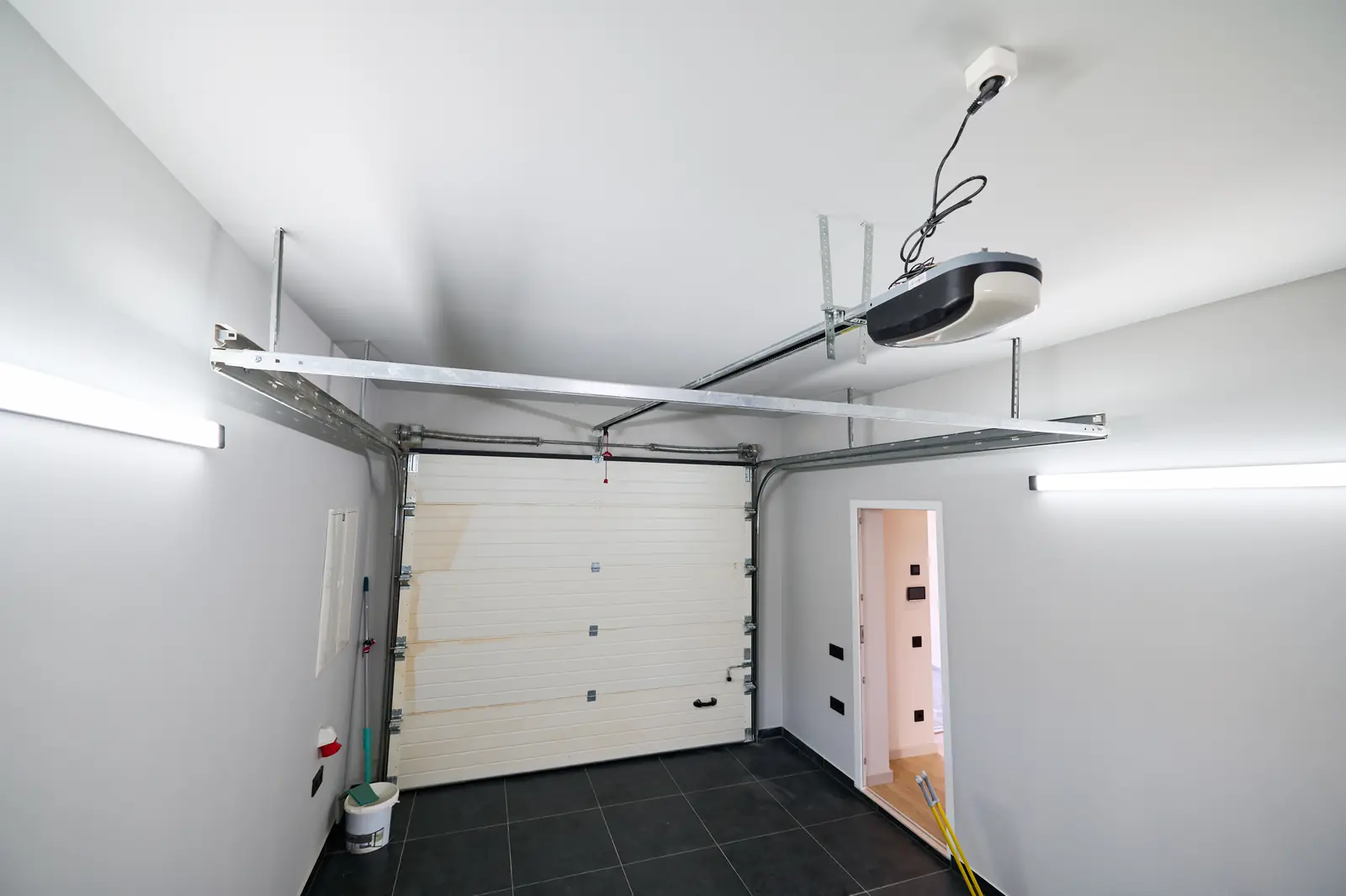
The first thing we do on any opener call is pull the emergency release cord and lift the door by hand. A properly balanced door should lift with modest effort and stay put about halfway up. If it is heavy, drops fast, or shoots upward, the problem is in the door, not the motor.
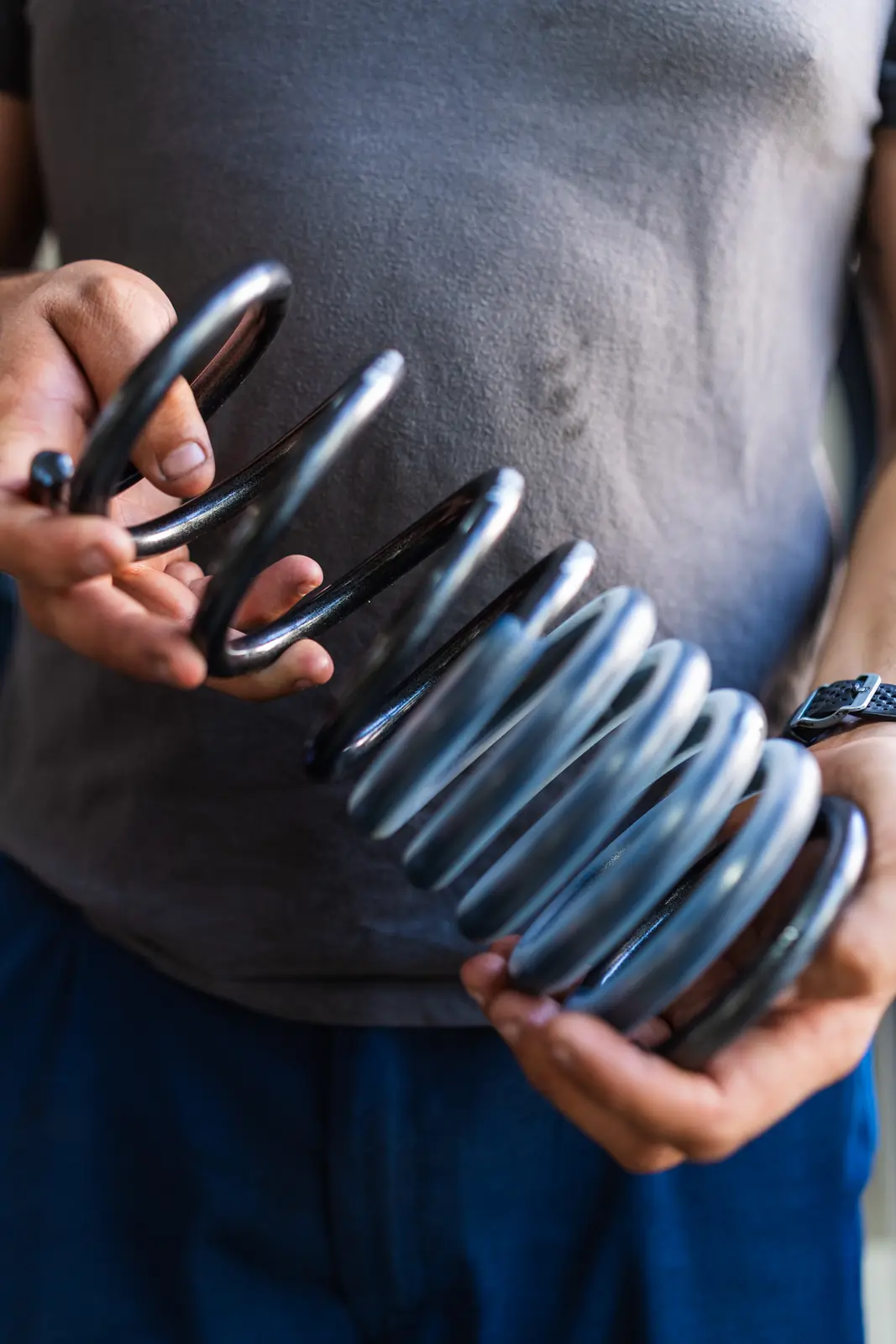
That matters because an opener is built to guide a balanced door, not to lift dead weight. A broken torsion spring, a frayed lift cable or a seized roller can make an opener grind, stall or reverse, and replacing the motor will not fix any of it. In those cases the right call is spring replacement or cable repair first.
A quick safety note: if you suspect a broken spring or cable, do not keep pressing the button and do not try to lift the door yourself. Springs and cables are under heavy tension and can cause serious injury. Leave the door where it is and call us at (262) 555-0123.
When To Call
Signs You NeedOpener Repair
- Motor hums but the door does not move
- Door reverses before reaching the floor
- Opener lights blink and nothing happens
- Remotes or keypad stopped working
- Grinding, clicking or chain slapping noises
- Door only closes while holding the button
- Opener died after a storm or power surge
- Door stops short or slams at the top
Common Faults
What Usually Goes Wrongand How We Fix It
Most opener problems fall into a handful of patterns. The symptom usually points us toward the cause within a few minutes.
| Symptom | Likely Cause | Typical Fix |
|---|---|---|
| Motor hums, trolley does not move | Stripped drive gear, failed capacitor, or a jammed door | Gear and sprocket kit, capacitor replacement, door check |
| Door closes, then reverses before the floor | Misaligned photo-eyes, close limit set too low, or force too low for the cold | Realign sensors, reset travel limits and force |
| Door only closes while you hold the wall button | Photo-eye beam blocked or a sensor wire damaged | Clean, realign or replace sensors and wiring |
| Lights blink and door will not move | Safety sensor fault or diagnostic error code | Read the code, repair the indicated circuit |
| Nothing happens at all | Tripped GFCI, failed logic board, or bad transformer | Check power path, replace board if needed |
| Remote dead, wall button works | Battery, lost programming, or failed receiver | New battery, reprogram, or add an external receiver |
| Chain slaps or belt slips | Loose or stretched chain or belt | Tension adjustment or replacement |
Blinking lights deserve special mention. Many modern openers flash their work light or an LED on the motor head in a specific pattern to report a fault. Reading that code tells us whether we are looking at a sensor problem, a travel-limit problem, a motor issue or a board fault, which keeps diagnosis quick and keeps you from paying for parts you did not need.
Inside the Unit
Gears, Logic Boardsand Capacitors
On many chain and belt openers, the motor drives a worm gear that turns a nylon drive gear, and that gear turns the sprocket that moves the chain or belt. The nylon gear is deliberately the weak link. When a door binds or the opener works against a heavy, unbalanced door for years, the teeth wear down until the motor runs with nothing moving. We replace the gear and sprocket assembly, re-grease it, and then fix whatever made the door hard to move in the first place.
The logic board is the opener's brain. It reads the wall button, remotes and sensors, controls the motor relay and stores travel limits and remote codes. Lightning strikes and power surges are the classic board killers, and summer storms around the Menomonee River valley give us a steady stream of them. Signs include an opener that does nothing, clicks without running, or ignores every remote at once.
On AC openers, a weak start capacitor causes a hum with no movement or a motor that only starts after a few tries. It is an inexpensive part and a quick fix. DC openers have no start capacitor but can suffer failed motors or drive boards instead.
Not every board or gear is worth replacing. If an opener is old enough that its parts are discontinued, or a board would cost a large share of a new unit, we will say so plainly.
Our Process
How We HandleYour Opener Repair
Describe the Symptoms
Call (262) 555-0123 and tell us what the opener is doing, including any blinking lights or sounds. That often points us to the likely cause before we arrive.
Test the Door First
We disconnect the opener and check the door's balance, springs, cables and rollers. An unbalanced door is fixed before we touch the motor.
Diagnose the Opener
We read error codes, test the sensors, wiring, board, capacitor and gears. You get a clear explanation and price before any work starts.
Make the Repair
We replace the failed part and correct the conditions that caused it, such as binding hardware or a loose header bracket.
Set Limits and Force
Travel limits and force settings are adjusted so the door seals at the floor and opens fully without straining or slamming.
Run the Safety Test
We perform the UL 325 reversal test, confirm the photo-eyes work, and cycle the door several times before we leave.
Safety Sensors
Photo-Eye Problemsand UL 325 Reversal
The two small sensors near the floor are the most frequent cause of service calls we get. Under the UL 325 safety standard, residential openers must reverse when something is in the door's path, and photo-eyes are how they detect it without contact. If the opener cannot see a clean beam between them, it refuses to close.
Typical causes we find:
- A sensor knocked out of line by a bike, trash can or snow shovel
- Dirt, cobwebs or road salt film on the lens
- Direct low sun shining into the receiving eye, common on west-facing doors in late afternoon
- Wires stapled through, chewed by mice, or corroded at the terminals
- Snowmelt from a car freezing into an ice ridge across the beam
We never bypass or bridge out sensors to get a door working. After any opener repair, we finish with a reversal test using a 1-1/2 inch board on the floor, and we confirm the photo-eyes stop and reverse the door. That test is the difference between a door that runs and a door that is safe to run.
Fine Tuning
Travel Limits andForce Settings
Two settings control how an opener behaves. Travel limits tell the opener where to stop at the top and bottom. Force settings tell it how hard it may push or pull before deciding something is wrong and reversing.
When the close limit is set too short, the door stops an inch above the floor and lets in cold air and mice. Set too long, the opener pushes into the floor, senses resistance and reverses, leaving the door open. On older units these are adjusted with screws or dials on the motor head; on newer ones they are programmed with buttons in a learn sequence.
Force is where we see the most damage done by well-meaning adjustments. Turning force all the way up can make a binding door close, but it also means the opener may not reverse when it should. The right fix is to find the binding, whether that is a worn roller, a bent track or a dry hinge, and then set force only as high as the balanced door needs.
Wisconsin weather adds a twist. On a sub-zero morning, stiff weatherstripping and thickened lubricant make the door harder to move, and an opener set right in July may reverse in January. We set limits and force with that in mind and recommend roller replacement when old, dry steel rollers are causing the drag.
Remotes & Access
Remotes, Keypadsand Smart Controls
Remote problems are usually simple, but they are frustrating when you are sitting in the driveway in a snowstorm. Before you call, try a fresh battery and check whether the wall console has its lock or vacation mode turned on, which disables remotes.
If that does not help, we can clear and reprogram the opener's memory, pair new remotes and keypads, and set up your car's built-in buttons. Clearing memory is also smart after you move into a new home, since you have no idea how many old remotes are still out there.
Older openers with DIP switches use a fixed code that can be copied. Modern ones use rolling codes, which change with every press. If your opener is fixed-code but otherwise healthy, an add-on receiver can sometimes bring rolling code remotes to it, though it is often a sign the whole unit is near the end of its life.
For Wi-Fi and smart openers, we troubleshoot app pairing, router range issues in detached garages, and the door sensor tilt switch that tells the app whether the door is open or closed.
Drive Specific
Chain, Belt, Screwand Jackshaft Repairs
Each drive type has its own wear points, and knowing them speeds up the repair.
- Chain drive: chains stretch and start slapping the rail. We re-tension them and check the sprocket, trolley and master link.
- Belt drive: belts can slip on the sprocket or develop cracked teeth with age. A worn belt or a broken trolley carriage is a straightforward replacement.
- Screw drive: the threaded rod needs the right grease. In cold, unheated garages the old grease gums up, and the trolley can strip its thread insert.
- Wall-mount jackshaft: these mount on the torsion bar, so we check the shaft coupling, the cable tension monitor and the automatic lock along with the motor itself.
On every drive, we also inspect the door arm, the reinforcement strut on the top section and the header bracket. A loose header bracket can rip out of the framing over time and is one of the more common hidden faults in older Menomonee Falls garages.
Repair or Replace
When Repair StopsMaking Sense
We would rather fix a good opener than sell a new one. A gear kit, a sensor pair, a capacitor or a remote reprogram is usually a clear win. But there are times when putting money into an old unit does not add up.
- The opener has no photo-eye sensors, so it does not meet the safety-reversal requirements that have applied since the early 1990s.
- It uses fixed DIP-switch codes and you want modern security.
- Parts like the logic board are discontinued or priced close to a new unit.
- It has needed several repairs in a short time.
- You want features it cannot offer, such as battery backup, quiet DC operation or Wi-Fi.
In those cases, we will give you the repair price and a replacement option side by side and let you decide. You can read about our garage door opener installation service to see what an upgrade includes. Homeowners across Menomonee Falls, Germantown, Butler, Lannon and Brookfield call us at (262) 555-0123 for exactly this kind of straight answer.