How Springs Work
The Muscle BehindEvery Garage Door
A typical 16x7 insulated steel door can weigh 150 to 250 pounds or more. Your opener is not designed to lift that weight on its own. The springs counterbalance the door so that, when everything is adjusted correctly, the door feels like it weighs only a few pounds and stays put when you stop it halfway.
The opener simply guides that balanced door up and down. When a spring breaks, the counterbalance disappears, and the full weight of the door lands on the opener, the cables and anyone trying to lift it by hand. That is why a door with a broken spring often will not open at all, or the opener strains, lifts it a few inches and stops.
Spring replacement is the most common repair we make in Menomonee Falls. It is also one of the most important to get exactly right, because the spring has to be matched to the weight and height of your specific door.
When To Call
Signs You NeedSpring Replacement
- Loud bang from the garage
- Visible gap in a torsion spring
- Door feels extremely heavy
- Opener strains then stops
- Door slams shut or drops quickly
- Door lifts unevenly or crooked
- Stretched or sagging extension springs
Spring Types
Torsion VersusExtension Springs
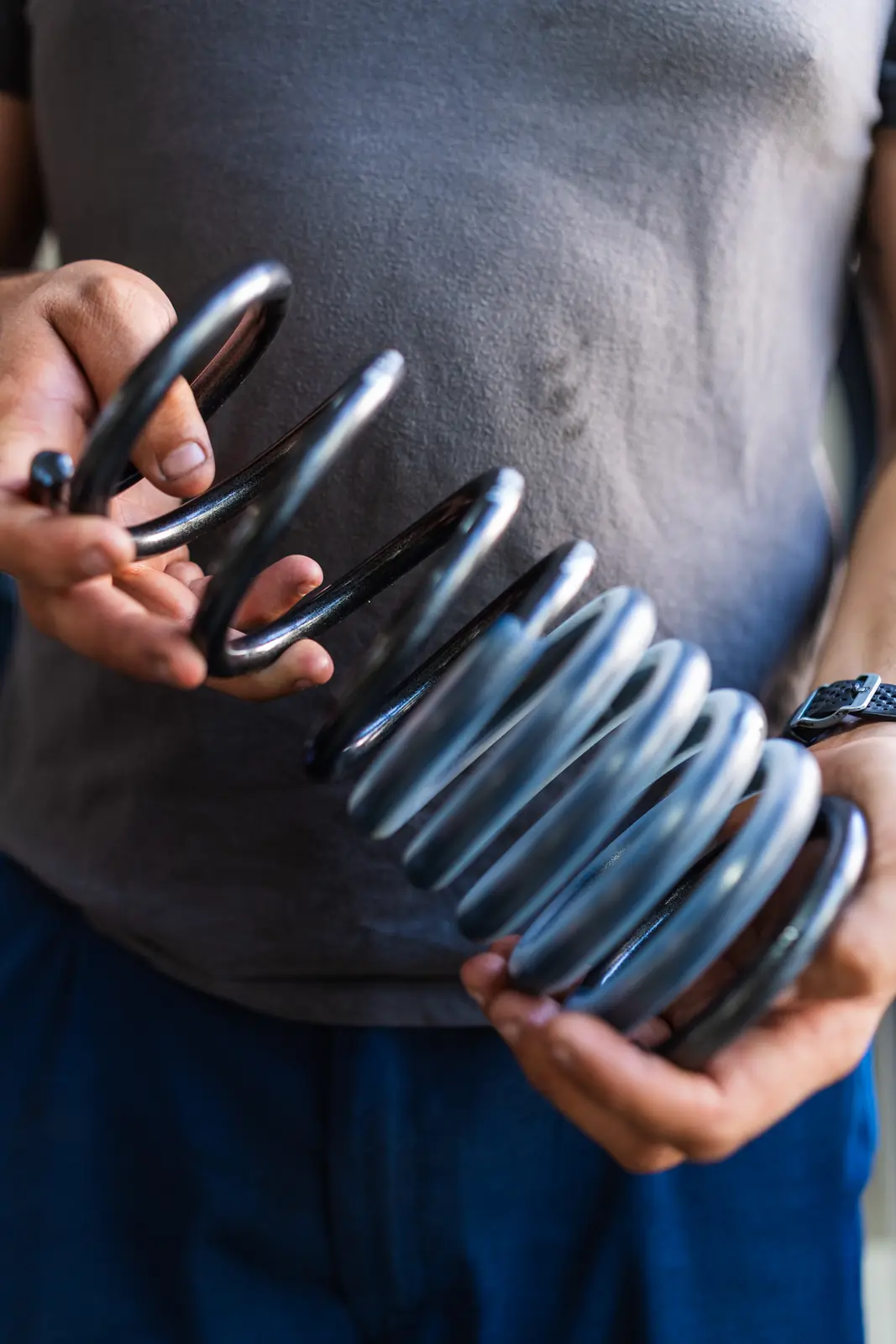
Residential doors use one of two spring systems. Many homes around Menomonee Falls, especially older ranches and split-levels, still have extension springs. Most newer homes have torsion springs. Here is how they compare.
| Feature | Torsion Springs | Extension Springs |
|---|---|---|
| Location | On a steel shaft above the door opening | Along each horizontal track, above the door |
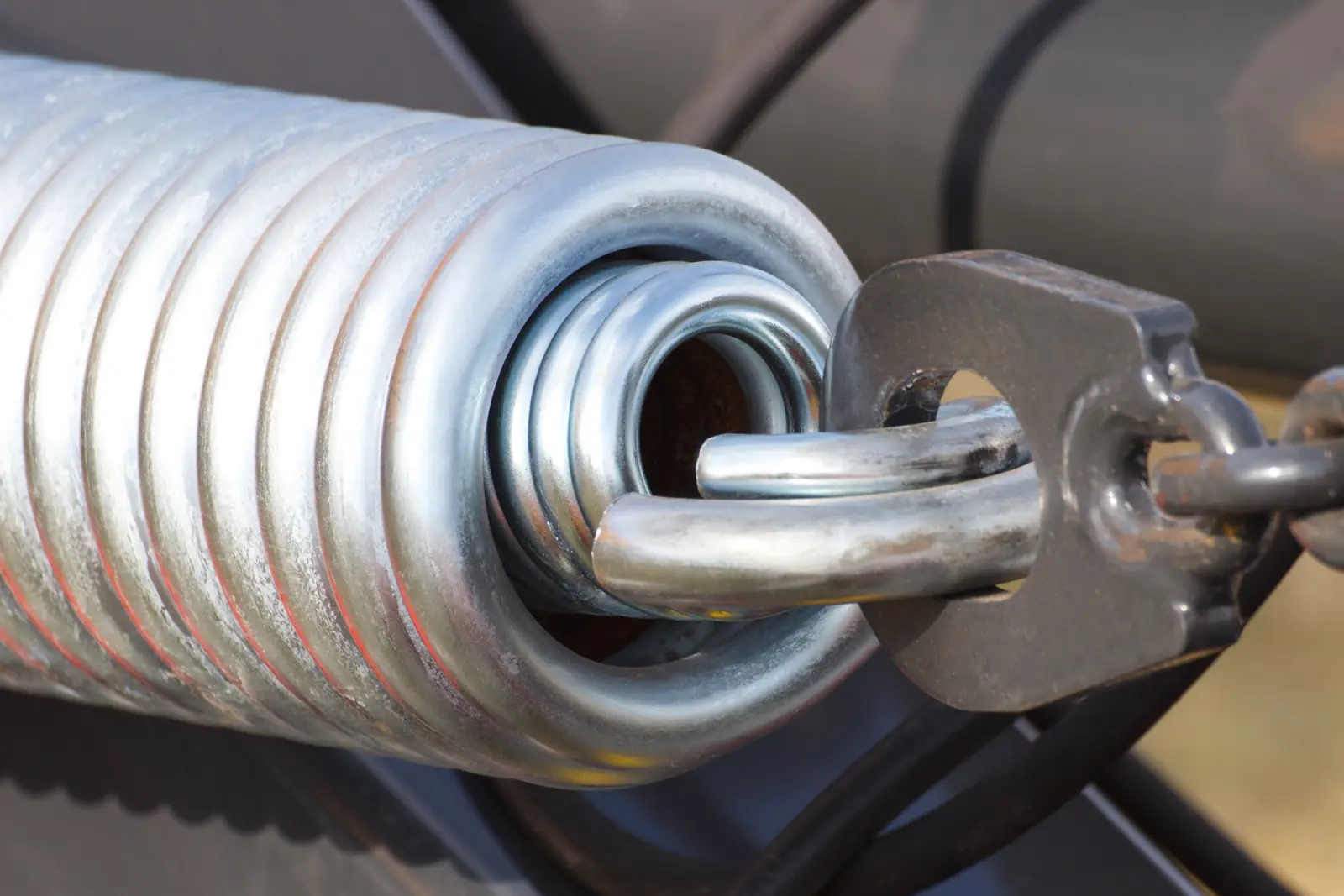
| How they work | Twist to store energy and turn cable drums | Stretch and contract with pulleys and cables |
| Typical lifespan | About 10,000 cycles standard, more with high-cycle springs | Often fewer cycles than torsion |
| Door control | Smoother, more even lift | Can be jerkier as springs age |
| Safety when broken | Contained on the shaft | Requires safety containment cables |
| Best for | Most modern and heavier insulated doors | Lighter doors and some older or low-headroom garages |
If your extension springs do not have a safety cable running through the middle of each spring, we strongly recommend adding them. Without one, a breaking extension spring can whip across the garage. In many cases we can also convert an extension spring door to a torsion system for smoother, safer operation.
Why They Break
Springs Wear OutOne Cycle At A Time
Every time your door opens and closes, that is one cycle. A standard torsion spring is commonly rated for around 10,000 cycles. A busy household that uses the garage as its main entrance can run four to six cycles a day, which puts a standard spring near the end of its life in roughly five to seven years.
Several factors shorten that lifespan:
- Cold weather. Steel becomes more brittle at low temperatures, so fatigued springs often snap during a Wisconsin cold snap.
- Rust. Humidity and road salt corrode the coils, creating friction and weak spots. A light coat of garage door lubricant on the coils helps.
- Undersized springs. A spring that is too small for the door works harder on every cycle and fails early. This is common after a previous budget repair.
- Poor balance. A door that is out of balance stresses the springs and the opener at the same time.
Breaks almost always happen with no warning. Most homeowners describe a loud bang from the garage, often when nobody was using the door.
Our Process
How We HandleYour Spring Replacement
Safe Release
We secure the door with clamps and safely unwind any remaining tension from the old springs.
Measure And Match
We measure wire size, inside diameter, length and wind direction, and confirm your door's weight and height.
Install New Springs
We mount the new springs on the shaft or tracks and replace worn bearings or hardware as needed.
Wind And Balance
We wind the springs to the correct number of turns and adjust until the door holds steady at mid-height.
Inspect And Test
We check cables, drums and rollers, lubricate the system and test the opener's safety reversal.
Sized Correctly
Matching The SpringTo Your Exact Door
There is no such thing as a universal garage door spring. Each torsion spring is defined by its wire gauge, inside diameter, length and wind direction, and the correct combination depends on the door's weight, height and drum size. A heavy 8-foot-tall carriage-house door needs a very different spring than a light, uninsulated 9x7 single door.
Before we install anything, we measure the old springs, check the door's weight and confirm the drum and track setup. If a previous installer used the wrong springs, we correct the size rather than repeating the mistake. Getting this right is what lets the door float at the halfway point instead of crashing down or flying up.
On two-spring doors, we recommend replacing both springs together. They have the same number of cycles on them, so when one breaks, the other is usually close behind. Replacing them as a pair keeps the door balanced and saves you a second service call a few months later.
Cycle Ratings
Standard OrHigh-Cycle Springs
When we replace your springs, you can choose between standard springs and high-cycle springs. High-cycle springs use heavier wire and a longer body to spread the stress over more steel, which can significantly extend their service life.
High-cycle springs make the most sense when:
- Your family uses the garage door as the main way in and out of the house.
- You plan to stay in your home for many years.
- Your previous springs broke sooner than you expected.
- You have a heavy insulated or wood door that works the springs harder.
Standard springs remain a solid choice for lightly used doors or if you are planning to sell soon. Your technician will explain the options and the difference in price so you can decide.
Safety Warning
Please Do NotReplace Springs Yourself
Online videos make spring replacement look simple. It is not. A wound torsion spring stores a tremendous amount of energy, and releasing it the wrong way can spin a winding bar or loose tool with enough force to break bones or cause head injuries. Extension springs carry the same risk when stretched.
Professionals use purpose-made winding bars, clamp the door and shaft in place, and follow a strict sequence for unwinding and winding. We also inspect the cables, drums, center bearing plate and end bearing plates, because a broken spring often damages these parts on its way out.
Until we arrive, keep the door closed if possible and do not try to lift it by hand or with the opener. If the door is stuck open, keep everyone out from underneath it. You can reach us at (262) 555-0123 for guidance.
Full Inspection
More Than JustA New Spring
A spring break sends a shock through the whole system, and the opener may have strained against the dead weight before anyone noticed. That is why every spring replacement includes a check of the parts that work alongside it.
- Lift cables for fraying, kinks or rust. If they are worn, see our cable repair service.
- Cable drums for cracks or worn grooves. Damaged drums are handled through drum replacement.
- Bearings on the torsion shaft for wobble or grinding.
- Rollers and hinges for wear that adds drag to the door.
- The opener for stripped gears or force settings that were raised to compensate for a weak spring.
We finish by balancing the door, lubricating moving parts and testing the safety reversal so the opener stops and reverses on contact.
Local Service
Spring Repair AcrossMenomonee Falls And Beyond
We replace springs every week throughout Menomonee Falls, from older homes near the Menomonee River and Old Falls Village to newer subdivisions off Lilly Road and County Line Road. We also serve Germantown, Sussex, Butler, Lannon, Brookfield, Mequon, Wauwatosa and northwest Milwaukee.
Because a broken spring often traps a car in the garage, we treat it as an urgent call. Our same-day repair service is designed for exactly this situation. For other door problems, visit our main garage door repair page.